
Hybrid snowdrop
Galanthus hybrids
Description
Growing requirements
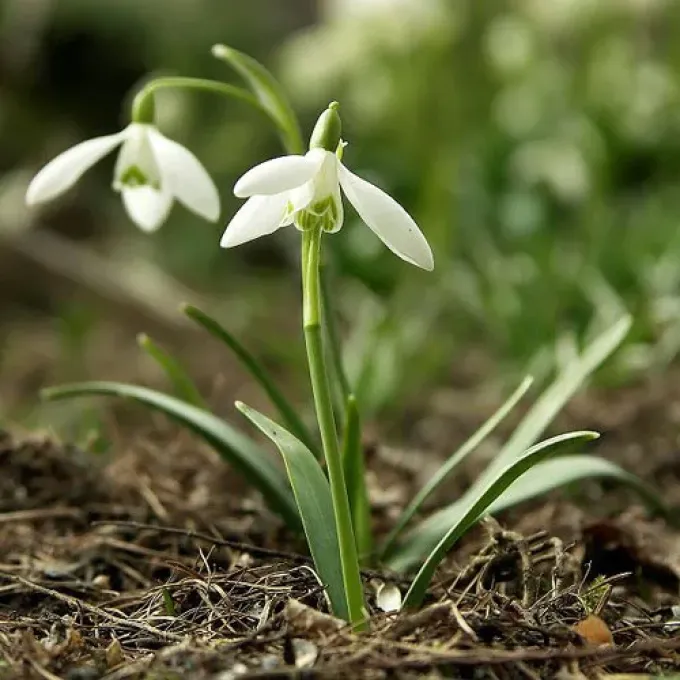
The hybrid snowdrop (Galanthus hybrids), belonging to the Amaryllidaceae family, represents a group of intentionally bred garden cultivars. These hybrids are prized for their larger flower size, varied bloom timing, and enhanced vigor in garden settings.
The crop requires soil that is rich in organic matter, moist, yet well-drained. Heavy clay soils should be amended with leaf mold or coarse sand to prevent the waterlogging that is detrimental to the dormant bulbs during the summer months.
Site selection is crucial, favoring dappled shade under deciduous trees or shrubs. This mimics the natural forest floor conditions where the light is ample in early spring but protective shade is provided as the weather warms up.
Regarding climate, these plants are hardy and require a cold dormancy period to initiate spring development. They perform best in temperate climates where the seasonal shift is distinct, allowing for a gradual emergence and flowering cycle.
Agronomic management involves minimal intervention once established. Fertilization is generally applied immediately after flowering, using low-nitrogen, high-potassium mixtures to support bulb replenishment and healthy growth for the subsequent year.
Main diseases and pests
The most significant disease threat is Botrytis galanthina, known as gray mold, which thrives in cool, humid spring conditions. It can cause rapid decay of leaves and flowers if air circulation is insufficient within the planting bed.
Pest management is primarily focused on controlling the large narcissus fly and various species of nematodes that target the basal plate of the bulb. Infested plants should be rogue and destroyed to keep the surrounding stock healthy.
Slugs and snails present a constant threat to the emerging green shoots in early spring. Barriers such as crushed gravel or specialized organic repellents are effective ways to protect the young foliage during its most vulnerable stage.
Cultural practices such as spacing bulbs adequately help reduce the risk of disease spread. Avoiding overcrowding ensures better airflow, which effectively dries foliage and mitigates the risk of fungal proliferation.
Systemic fungicides are recommended only as a preventative measure in regions with high historical disease pressure. Maintaining soil hygiene through the removal of decaying leaves in late spring is a fundamental step in integrated pest management.