
Allen's Snowdrop
Galanthus allenii
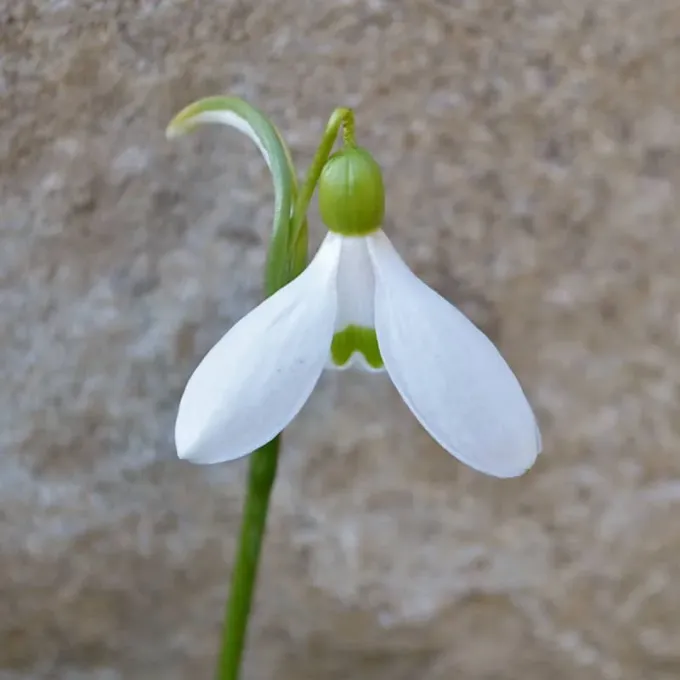
Description
Sowing dates
Planting of Allen's Snowdrop bulbs should ideally take place in late summer or early autumn. During this dormant phase, the bulbs have enough time to establish their root systems before the onset of winter.
The planting depth should be approximately 7 to 10 centimeters. Factors such as soil texture play a role; in lighter, sandy soils, slightly deeper planting is often beneficial for bulb stability.
Spacing between bulbs should be kept at 10 to 15 centimeters. This distance prevents competition for nutrients and allows sufficient room for the plant to propagate by producing offsets or "daughter" bulbs.
After planting, a light watering is recommended to settle the soil around the bulbs. Applying a layer of organic mulch helps maintain consistent moisture levels and temperature during the rooting phase.
Vegetative propagation is the most effective method for home gardeners. Dividing clumps every three to four years ensures that the plants remain vigorous and continue to bloom abundantly each season.
Growing requirements
Galanthus allenii, a member of the Amaryllidaceae family, is a shade-tolerant perennial. It thrives in environments that mimic woodland conditions, with dappled light or partial shade throughout the day.
The soil must be fertile, humus-rich, and possess excellent drainage properties. While the plant appreciates consistent moisture, it is highly intolerant of waterlogged soil, which leads to bulb decay.
These plants prefer a neutral to slightly alkaline soil pH. Incorporating compost or well-rotted leaf mold into the planting area helps improve both the nutrient profile and the physical structure of the soil.
Allen's Snowdrop is naturally adapted to cold climates, exhibiting high frost resistance. It is capable of emerging and flowering early in the spring, often even while there is still residual snow on the ground.
Adequate air circulation is essential during the growing season. Preventing overcrowding helps minimize the micro-climatic humidity that can encourage the development of various fungal pathogens.
Main diseases and pests
Fungal diseases, specifically gray mold and Fusarium, are the primary health threats to this species. These conditions are typically exacerbated by poor drainage and excessive soil moisture levels.
Preventive measures include soaking the bulbs in a fungicide solution before planting. This reduces the pathogen load and gives the bulbs a healthier start in their new environment.
Pests such as bulb mites and nematodes can cause significant damage to the plant's vascular system. If infestation occurs, affected plants should be removed and destroyed to prevent local spread.
Small rodents can be a nuisance by consuming the bulbs. Planting in wire baskets or using physical barriers can protect the bulbs from being dug up and eaten during the dormant season.
- Ensure perfect drainage in all planting beds.
- Regularly inspect plants for yellowing or wilted leaves.
- Practice good hygiene by removing garden debris near the bulbs.