
Crinum natans
Crinum natans
Description
Growing requirements
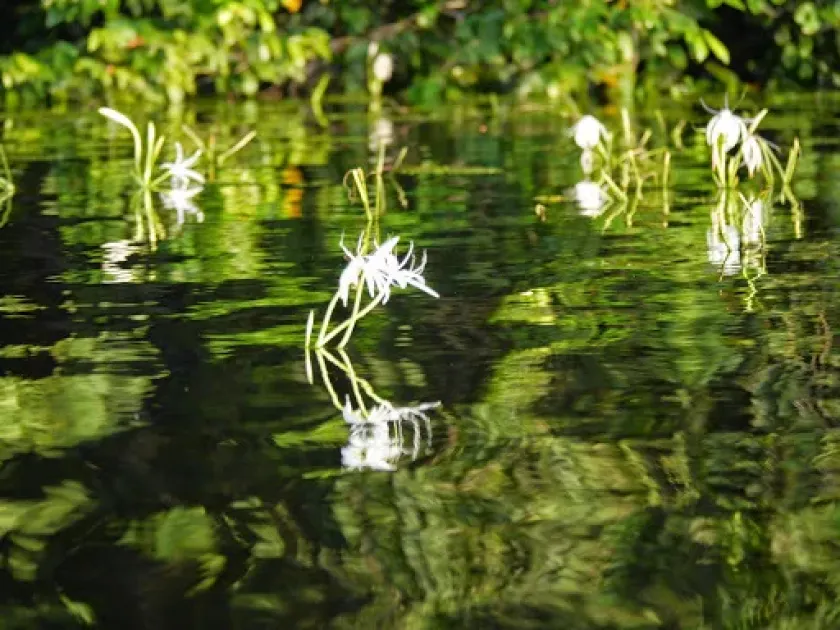
Crinum natans is a perennial bulbous plant belonging to the Amaryllidaceae family. It is native to the tropical rivers of West Africa, where it thrives in clear, flowing water systems.
To cultivate this species successfully, the aquarium must provide stable conditions with temperatures ranging between 22 and 28°C. The plant prefers soft to moderately hard water with a slightly acidic to neutral pH level.
The substrate is critical for this species; it requires a deep, nutrient-rich soil to support its extensive root system. When planting, it is vital to keep the top half of the bulb above the substrate to prevent rot, which is a common issue with bulbs.
Lighting requirements are moderate. While the plant can tolerate brighter light, intense illumination often leads to algae growth on its beautiful, undulating ribbon-like leaves, which are the main aesthetic feature of the plant.
Space management is necessary as the plant can reach considerable sizes. It is ideally suited for larger aquariums where its long leaves can cascade gracefully across the surface or form a striking centerpiece.
Main diseases and pests
The most common health threat to Crinum natans is bulb and root rot, typically caused by improper planting techniques, such as burying the bulb too deep, or by a poorly aerated substrate.
Nutrient deficiencies, particularly regarding iron, will manifest as pale or yellowing leaves. Consistent fertilization using root tabs or liquid additives is essential to maintain the plant's health and vibrant color.
Algal blooms on the leaf surface act as a major stress factor. They compete for nutrients and light, often leading to the premature death of the older leaves if not addressed through improved water quality management.
Bacterial or fungal infections can occur if the plant is physically damaged during routine maintenance. Any bruised or necrotic tissue should be carefully pruned to prevent the infection from spreading.
While the plant is generally hardy, persistent snail infestations can cause cosmetic damage. Maintaining a balance in the ecosystem is key to protecting the delicate leaf margins of this impressive species.