
Crinum hybrids
Crinum hybrids
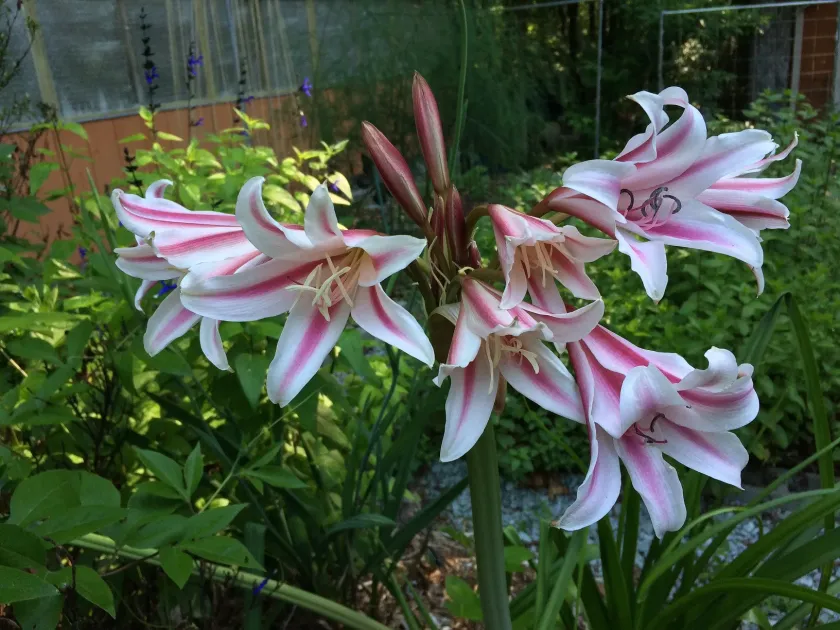
Description
Sowing dates
Crinum hybrids are typically propagated using offsets or 'bulblets' that emerge around the parent bulb. This is the most efficient method to ensure the new plant inherits the exact characteristics of the parent.
The best time to divide and transplant these bulbs is during the dormant season or early spring just before the active growth phase begins. Bulbs should be planted with the neck above the soil line.
Seed propagation is also possible but takes longer to reach flowering size. Seeds should be sown immediately after collection, as they have a short lifespan and are prone to drying out.
The growing medium for seedlings must be well-draining, such as a mix of peat and perlite, to prevent the large, fleshy seeds from rotting before they germinate.
Maintain consistent warmth during the initial rooting phase, ensuring the substrate is slightly moist but never waterlogged, which can be fatal for young Crinum bulbs.
Growing requirements
Crinum hybrids belong to the Amaryllidaceae family and are highly prized for their architectural foliage and large, fragrant, lily-like flowers that appear on long scapes.
These plants thrive in full sun to partial shade. In hot climates, filtered light is preferred during the afternoon to prevent sunscald on the broad, fleshy leaves.
A fertile, loamy soil that allows for excellent drainage is essential. If growing in containers, a rich mix containing compost and coarse grit or sand is ideal for healthy root development.
During the growing season, consistent moisture is required. However, the plants should be allowed to experience a dry rest period in the winter to trigger proper flowering cycles.
Temperature management is key to successful cultivation. While they are resilient, they generally perform best when night temperatures do not drop below 10–12°C during the resting phase.
Main diseases and pests
Scale insects are among the most common pests for Crinum, hiding in leaf axils and siphoning plant sap, which leads to stunted growth and reduced blooming capacity.
Mealybugs can also infest the bulb base, causing structural damage. Regular monitoring of the crown and soil surface is vital for early detection and mitigation.
Fungal issues such as red blotch (Stagonospora) are common in many Amaryllidaceae. The fungus creates red lesions on leaves and bulbs, often triggered by excessive humidity.
Root rot is a major threat caused by overwatering or poor drainage. It often manifests as sudden wilting of the foliage, requiring immediate inspection of the root system.
- Use systemic insecticides for localized pest control.
- Apply preventative fungicides during humid weather.
- Ensure adequate space between plants for better airflow.
- Remove any decaying or yellowing foliage promptly.
- Avoid overhead watering to keep foliage dry.