
Paradise Amaryllis
Amaryllis paradisicola
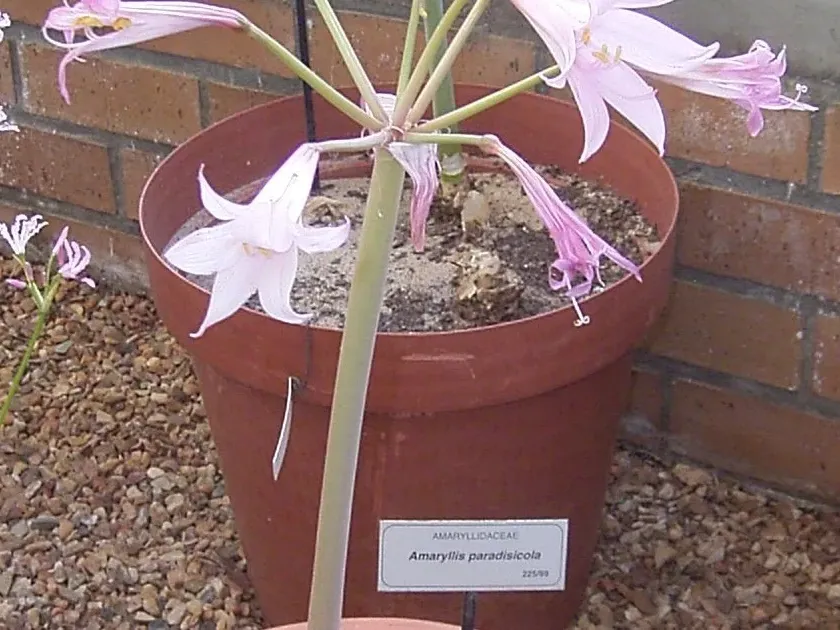
Description
Growing requirements
Paradise Amaryllis (Amaryllis paradisicola) is a member of the Amaryllidaceae family. It is a rare, localized species native to the arid rocky slopes of the Orange River valley in South Africa.
This bulbous perennial is highly adapted to extreme fluctuations in moisture, spending most of its life cycle in a dormant state during hot, dry months.
For successful cultivation, the plant requires excellent drainage. A gritty, mineral-rich soil mix is essential to simulate its natural habitat and prevent root rot.
Adequate sunlight is mandatory for the plant to thrive. It should be placed in the brightest available location, especially during its growing season.
Agricultural management requires a clear distinction between the wet, active growing season and the dry, dormant period to ensure the health of the bulb.
Main diseases and pests
Fungal pathogens represent the primary threat to Amaryllis paradisicola, especially when humidity levels remain consistently too high.
Pests such as mealybugs and bulb mites are known to infest the plant, potentially causing severe damage to the bulb tissue and leaves.
Poor aeration around the bulb base often results in bacterial infection, which is difficult to treat once the internal tissues are compromised.
Integrated pest management should include regular monitoring, good hygiene, and the cautious use of specialized chemical control agents.
Preventative measures are far more effective than curative ones, focusing primarily on moisture control and maintaining optimal air circulation.