
Amaryllis hybrids
Amaryllis hybrids
Description
Growing requirements
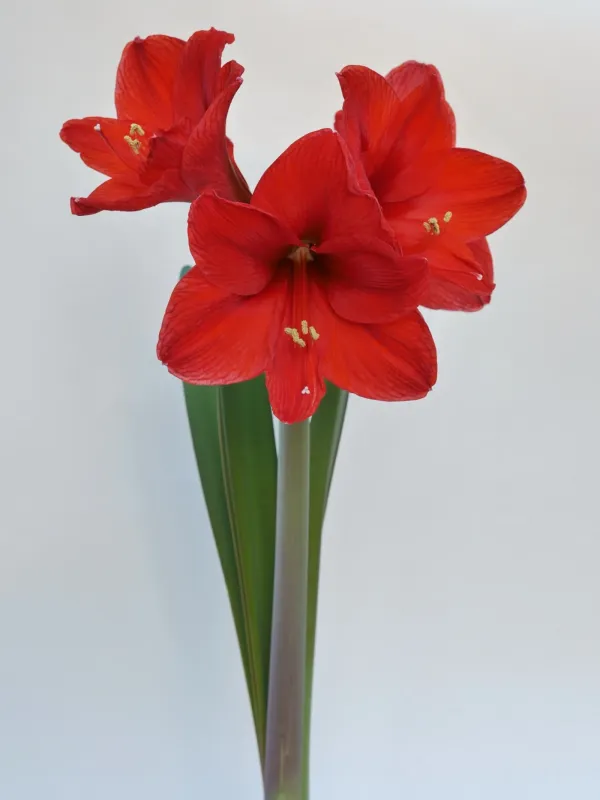
Amaryllis hybrids (Amaryllis hybrids) are members of the Amaryllidaceae family. These bulbous perennials are widely recognized for their showy, trumpet-shaped flowers and are extensively cultivated as indoor potted plants and greenhouse crops.
Native to Southern Africa, these hybrids have been improved through selective breeding to produce larger blooms and a wider range of colors. They thrive in environments with bright, indirect sunlight, making them suitable for bright window sills or controlled greenhouse conditions.
The ideal growing medium is a well-draining, nutrient-rich soil mix. A composition of peat, perlite, and loam ensures adequate aeration and moisture retention without risking root rot, which is essential for healthy bulb development.
Agronomic management relies heavily on the plant's dormancy cycle. Once flowering finishes, the plant enters a period of rest. During this phase, it requires lower temperatures (around 10°C to 12°C) and minimal to no irrigation to ensure successful re-blooming the following year.
Watering practices must be adjusted according to the growth stage. In the active growth phase, the substrate should be kept consistently moist but never waterlogged. Fertilization with high-potassium blends is recommended during the spring to support floral development.
Main diseases and pests
The most significant pathological threat to Amaryllis hybrids is Stagonospora curtisii, commonly known as "red blotch" or "red fire." This fungus causes characteristic red streaks and lesions on the leaves, stems, and bulbs, often resulting in severe plant decline.
Pest pressure from aphids, mealybugs, and bulb mites is common in greenhouse environments. These pests penetrate the plant tissues, causing stunted growth and acting as vectors for viral and secondary bacterial infections.
Effective management strategies include treating bulbs with protective fungicides prior to planting and ensuring adequate airflow to prevent moisture accumulation on the foliage. Sanitation of pots and tools is paramount to prevent disease spread.
When infestation occurs, the use of targeted systemic insecticides or horticultural oils is required. Regular monitoring of the basal plate of the bulb is essential, as this is the primary site of infection for both fungal pathogens and mite colonization.
Integrated Pest Management (IPM) practices, including the use of sticky traps and biological controls, can significantly mitigate the reliance on chemical pesticides while maintaining the plant's ornamental quality and longevity.