
Truncated onion
Allium truncatum
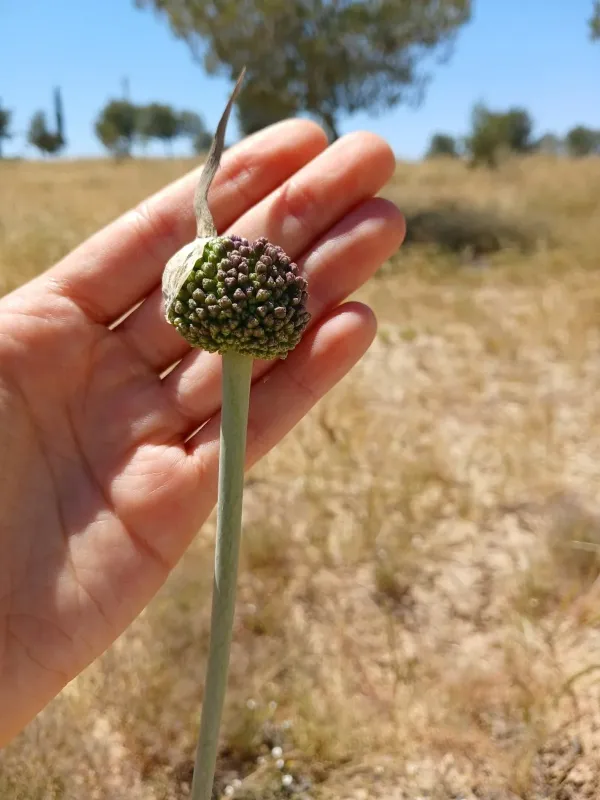
Description
Growing requirements
Truncated onion (Allium truncatum) is a perennial bulbous plant belonging to the Amaryllidaceae family. It is native to the arid and semi-arid regions of Western Asia, where it thrives in rocky, well-draining soil types.
The plant is highly adapted to intense sun exposure and requires a sunny location for optimal bulb development. Insufficient light levels negatively affect the plant's structural integrity and its ability to store nutrients.
Soil structure is critical for this species. It demands excellent drainage, as the bulbs are susceptible to physiological disorders and rot when exposed to stagnant water, especially during the dormant season.
Climate-wise, Allium truncatum prefers regions with pronounced seasonal changes. It is exceptionally tolerant of drought, which makes it an interesting subject for xeriscaping or specialized agricultural cultivation in dry zones.
Botanically, it is identified by its distinctively truncated bulb and slender foliage. The inflorescence develops on a singular stalk, producing a compact, elegant cluster typical of its genus but with unique anatomical markers.
Main diseases and pests
Root rot represents the primary agricultural threat to truncated onion. Excessive irrigation or heavy, water-retaining soils create a perfect environment for soil-borne pathogens that target the root system.
Pests such as onion maggots or thrips can damage the foliage and bulbs if not controlled. Implementing integrated pest management strategies, such as crop rotation, is essential for maintaining crop health.
Fungal leaf diseases may occur during humid springs. Proper spacing between plants is recommended to allow for adequate airflow and to prevent the build-up of moisture around the neck of the bulb.
Nematodes are another concern in contaminated soils. Growers should prioritize the selection of disease-free planting material to minimize the risk of introducing these pests to new cultivation areas.
Prevention is the most effective approach to managing threats in this crop. Regular monitoring for any signs of yellowing or wilting allows for immediate corrective actions, such as adjusting the moisture regime.