
Prairie onion
Allium stellatum
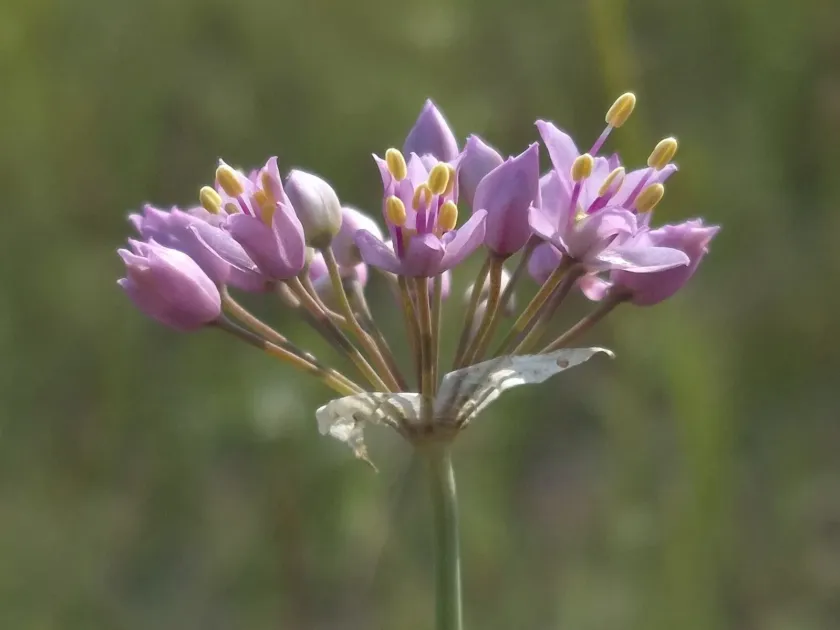
Description
Sowing dates
Sowing Prairie onion (Allium stellatum) seeds is best done in the late fall, as they require a period of cold stratification to break dormancy. Planting in October or November ensures that the seeds are exposed to winter temperatures, leading to uniform germination when the ground warms up.
If you choose to sow in the spring, it is essential to stratify the seeds in a refrigerator for 4 to 6 weeks at temperatures between 2 and 5 degrees Celsius. Seeds should be sown at a depth of about 1 to 1.5 centimeters in well-drained soil, with rows spaced roughly 20 centimeters apart.
Seedlings emerge slowly and require consistent moisture during their initial growth phase. Once the plants reach a size with two or three true leaves, thinning is recommended to maintain a spacing of 10–15 centimeters between plants, which allows the bulbs to reach their optimal size.
Indoor propagation is also possible, starting the seeds in trays during late winter. This greenhouse approach provides the seedlings with a head start, making them more resilient when transplanted outdoors after the final spring frost.
The site selection is vital for successful sowing; the plant prefers full sun exposure to promote healthy development of its root system and stems.
Growing requirements
Allium stellatum, commonly known as the Prairie onion, is a member of the Amaryllidaceae family native to North America. It is a hardy herbaceous perennial typically found in prairies, meadows, and rocky outcroppings, demonstrating high adaptation to diverse climates.
This species thrives in sandy or loamy soils with neutral to slightly alkaline pH. Drainage is the most important factor in soil management, as the bulbs are susceptible to rot if they sit in waterlogged soil for extended periods.
The plant features thin, grass-like leaves and tall, erect stems reaching up to 50 centimeters. Its hallmark is a beautiful, star-shaped inflorescence, typically in shades of pink or rose, which blooms during the height of the summer season.
Cultural maintenance involves periodic weeding and soil aeration around the base of the plant. While Prairie onion is drought-tolerant once established, providing supplemental water during severe dry spells will help maintain the vitality of the plant throughout the growing season.
Regarding fertilization, minimal application is required. A balanced, low-nitrogen fertilizer applied in early spring is sufficient to support initial vegetative growth without compromising the flowering intensity of the plant.
Main diseases and pests
Common pests affecting Prairie onion include onion maggots and thrips, which target the foliage and can reduce the overall health of the plant. Implementing crop rotation and keeping the surrounding area free of debris helps minimize pest populations naturally.
Fungal issues such as downy mildew or bulb rot can occur if soil drainage is inadequate or if humidity levels remain too high for prolonged periods. Symptoms often include yellowing leaves, brownish spots, or stunted growth patterns.
Preventive care is the most effective strategy, involving careful site selection to ensure good air circulation. Removing and destroying any infected plant parts immediately is crucial to prevent the spread of pathogens throughout the patch.
For organic pest management, growers may use neem oil or insecticidal soaps if an infestation is detected. These treatments should be applied during cooler times of the day to avoid leaf burn and to ensure maximum effectiveness against the target insects.
If chemical fungicides become necessary, they should be chosen based on their specific efficacy against the detected pathogen and applied in strict accordance with the manufacturer's instructions for dosage and frequency.