
Roth's onion
Allium rothii
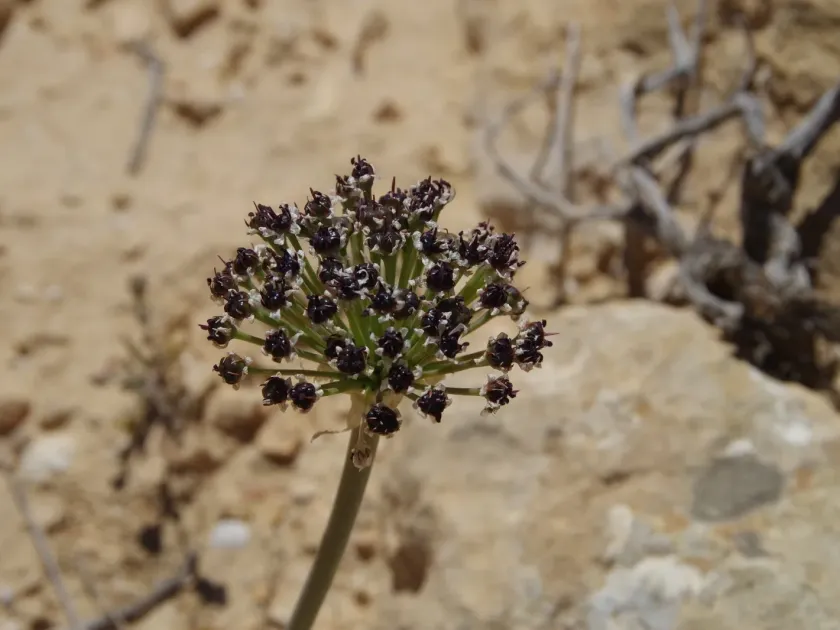
Description
Growing requirements
Roth's onion (Allium rothii) is a perennial herbaceous plant belonging to the Amaryllidaceae family, subfamily Allioideae. In its natural environment, this species is primarily distributed throughout the Eastern Mediterranean region, including countries such as Israel, Jordan, and Lebanon.
This species is native to arid, rocky terrains and hillsides. It has evolved to thrive in specific edaphic conditions, preferring well-drained, often calcareous or sandy soils with low organic content, which is characteristic of semi-arid environmental zones.
The plant features a prominent bulb that serves as an organ for storing moisture and essential nutrients during the harsh, dry summer months. Its root system is shallow, effectively capturing seasonal moisture during the short spring growing season typical of its native climate.
For successful development, Roth's onion requires high levels of sun exposure and moderately warm spring temperatures. The crop is extremely sensitive to waterlogging, making it critical to ensure excellent soil drainage if the species is cultivated in a garden setting.
In terms of human use, this species is typically regarded as an ornamental plant or a botanical specimen for rock gardens rather than a commercial vegetable crop. Its biological cycle is strictly tied to regional climate rhythms, with bulb dormancy triggered immediately after flowering as temperatures rise.