
Pruinose leek
Allium pruinatum
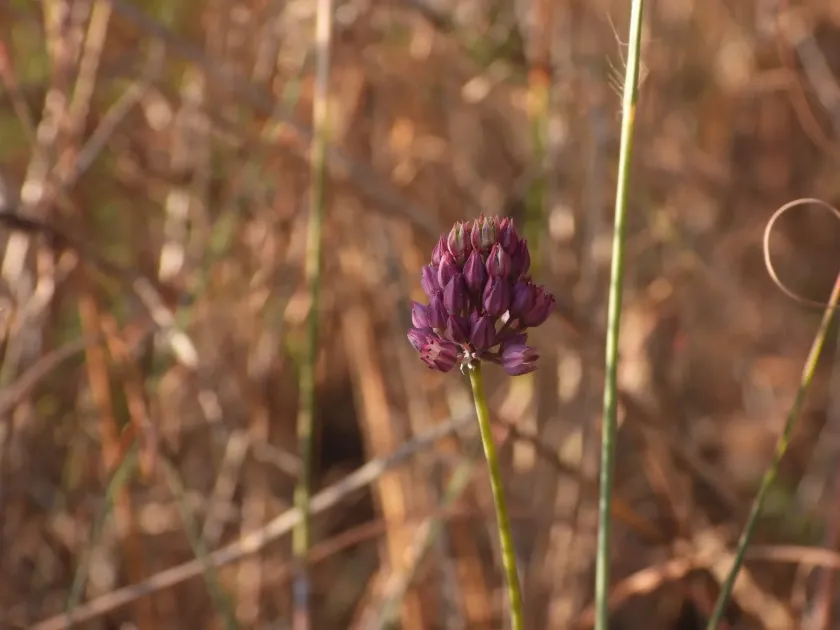
Description
Sowing dates
Sowing of Allium pruinatum should take place in early spring once the soil has warmed up to at least 8–10 degrees Celsius to ensure quick germination.
The seeds have a relatively high germination rate when planted in moist, well-prepared soil, though initial growth can be slow compared to other onion varieties.
For best results, seeds should be sown at a depth of 1.5 to 2 centimeters in rows spaced about 30 centimeters apart to provide ample growing room.
Winter sowing is also an option in milder climates, as the seeds benefit from the natural stratification process provided by colder temperatures.
Proper thinning is essential after the emergence of seedlings to ensure that each plant has enough space for optimal bulb and leaf development.
Growing requirements
As a member of the Amaryllidaceae family, the pruinose leek thrives in sunny, open locations with well-draining soil to prevent root issues.
Light sandy or loamy soils are ideal for this crop, as they allow for adequate aeration and prevent the waterlogging that often leads to bulb rot.
While the plant is hardy and adapts well to various conditions, consistent moisture is required during the peak growing season to ensure tender leaves.
The soil pH should ideally remain neutral, as highly acidic conditions can lead to nutrient deficiencies and stunt the growth of the young plants.
It is a perennial plant that can remain in the same location for several years, making it a great candidate for permanent garden beds or dedicated onion patches.
Yield
Yield is primarily determined by the quality of the soil and the consistency of the irrigation schedule throughout the spring and summer months.
The plant usually establishes its root system in the first year, resulting in lower leaf production compared to subsequent years when the plant is fully mature.
Regular fertilization with organic matter or balanced mineral fertilizers can significantly enhance the volume of green mass harvested each season.
Yield stability is maintained by removing flower stalks promptly, which directs the plant's energy toward vegetative growth rather than seed production.
Proper density management allows for multiple cuttings during the growing season, maximizing the total output per square meter of cultivated land.
Main diseases and pests
The primary pests affecting this leek variety include onion flies, which can damage the roots and base of the stems during the early stages of development.
Excessive humidity combined with poor airflow can lead to fungal diseases like downy mildew, which appears as discolored spots on the foliage.
Preventative strategies such as rotating crops and ensuring optimal spacing between plants are the most effective ways to minimize disease impact.
Aphids and thrips may occasionally infest the plants during hot, dry spells, requiring careful monitoring to prevent significant damage to the leaf tissue.
If chemical or organic control is necessary, it should be applied during the early stages of infestation to protect the quality of the edible leaves.
Harvesting
The harvesting of leaves is best performed with a sharp knife, cutting the green tops at a distance of 3–5 centimeters above the base to allow regrowth.
Early morning harvests are recommended as the leaves are most turgid and have the highest concentration of flavor-enhancing oils during this time.
Post-harvest handling requires quick cooling or storage in a high-humidity environment to prevent the delicate leaves from wilting or drying out prematurely.
For those interested in long-term preservation, the leaves can be finely chopped and frozen, preserving their distinct aroma and culinary characteristics.
After the final harvest of the season, it is beneficial to apply a light mulch to protect the roots from extreme temperature fluctuations during winter.