
Obtuse-flowered onion
Allium obtusiflorum
Description
Growing requirements
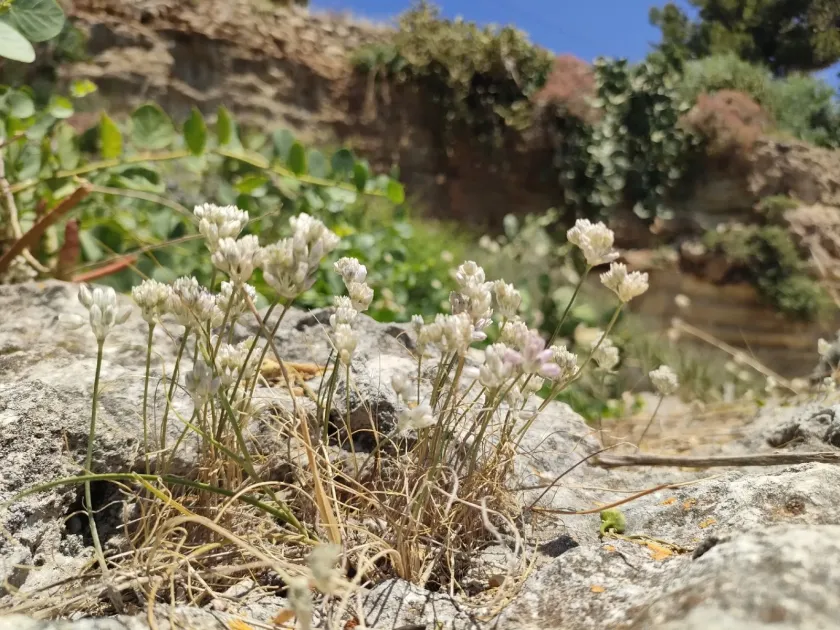
Obtuse-flowered onion (Allium obtusiflorum) is a perennial herbaceous plant belonging to the Amaryllidaceae family. Native to mountain regions and rocky slopes, this species is well-adapted to surviving in harsh environments with limited soil nutrition and irregular water availability.
The plant features small, ovoid bulbs covered with brownish tunics and thin, grass-like leaves. Its defining morphological feature is the inflorescence, which consists of compact umbels with obtuse perianth segments, providing a distinct aesthetic appeal in wild populations.
Cultivation of this species requires well-drained, porous soils that mimic its natural rocky habitats. It is crucial to ensure that the site does not accumulate standing water, as the bulb is susceptible to fungal rots when the soil remains consistently damp during the dormancy phase.
The plant thrives under full sun exposure and is highly tolerant to heat and drought. It is well-suited for temperate climates, demonstrating resistance to fluctuating temperatures, which makes it a resilient option for dry-land landscaping and specialized container gardening.
Although it does not hold major commercial agricultural value as a food crop, it serves as a valuable resource for germplasm preservation and ornamental horticulture. It is frequently utilized in specialized botanical rock gardens due to its low maintenance requirements and its attractive, distinct appearance.