
Allium melanantherum
Allium melanantherum
Description
Growing requirements
Allium melanantherum is a perennial herbaceous plant belonging to the Amaryllidaceae family. Native to the rocky mountainous regions of the Balkan Peninsula, this species is well-adapted to surviving in specialized, nutrient-poor environments.
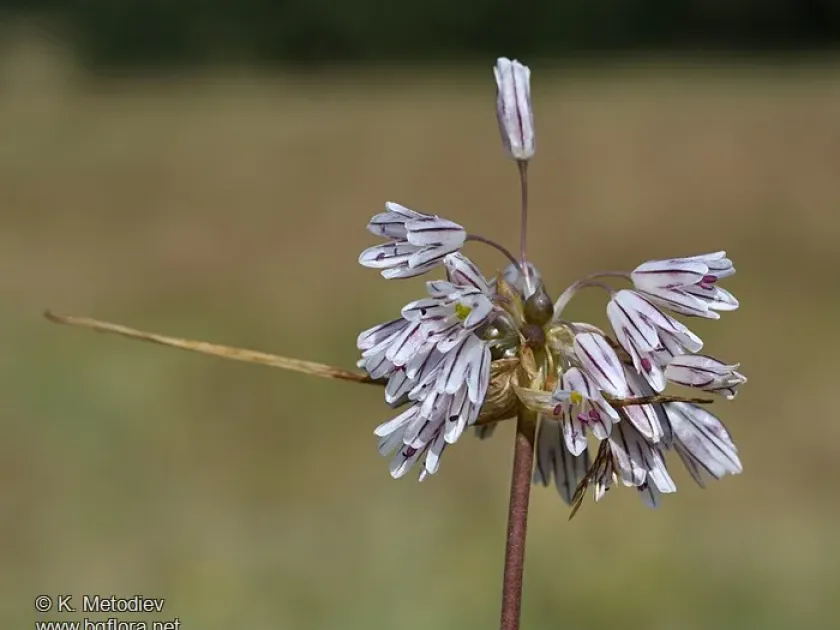
The botanical structure consists of small bulbs protected by tunics and linear foliage. The defining feature that gives the species its name is the presence of dark-colored anthers, which stand out prominently against the flower petals within the dense umbel inflorescence.
Cultivation requires strict adherence to drainage requirements. The species thrives in gritty, well-aerated substrates that prevent the bulb from sitting in water, as poor drainage is the primary cause of failure when introducing this plant to garden conditions.
Environmental conditions should mimic alpine habitats, emphasizing high solar exposure and moderate temperatures. The plant does not require high levels of nitrogen fertilization and prefers rocky soils that mirror its native limestone-heavy mountain slopes.
The primary horticultural use of Allium melanantherum is within specialized rock gardens and botanical collections. It is not an agricultural crop in the traditional sense, but it remains a subject of interest for conservationists and enthusiasts of wild Allium species.
Main diseases and pests
The most significant threat to the health of the plant is root rot caused by stagnant moisture. In cultivation, high humidity combined with poor soil aeration almost invariably leads to fungal infections that destroy the bulb structure.
Pests such as onion maggots may occasionally target the subterranean tissues. Management strategies rely on ensuring excellent drainage and maintaining a dry environment around the crown of the bulb, which serves as a natural deterrent to many common bulb-feeding insects.