
Sickle-leaved onion
Allium falcifolium
Description
Growing requirements
The sickle-leaved onion (Allium falcifolium) is a perennial herbaceous plant belonging to the Amaryllidaceae family. Native to the western United States, specifically California and southwestern Oregon, it is typically found inhabiting rocky outcrops and slopes where it thrives in harsh environments.
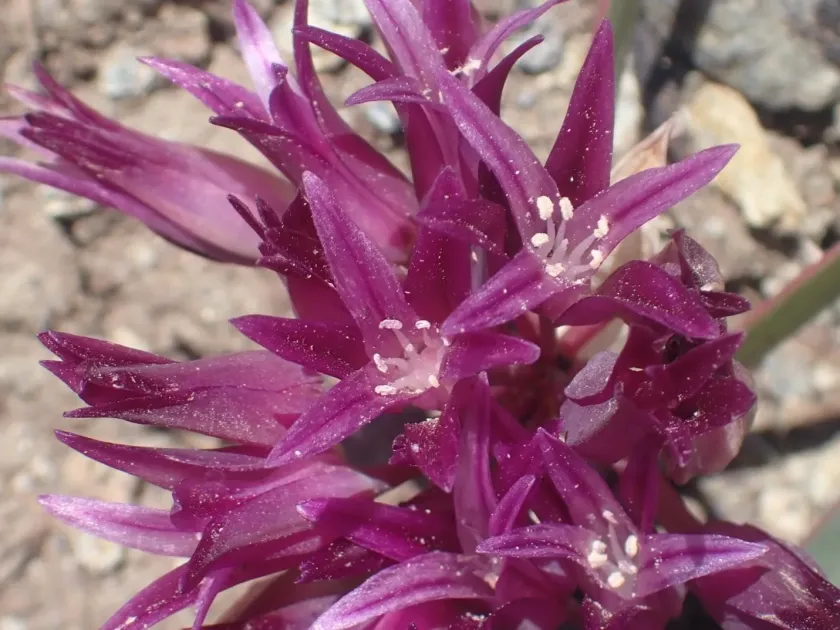
The species is botanically distinguished by its flattened, falcate (sickle-shaped) leaves that rise from a small, bulbous base wrapped in dark, membranous tunics. Its inflorescence is a dense, spherical umbel consisting of numerous pink to deep reddish-purple flowers, blooming in the spring and early summer.
Cultivation of Allium falcifolium requires a deep understanding of its natural ecological niche, which is characterized by extremely well-drained, nutrient-poor soil. It is best suited for rock gardens or specialized containers where the grower can strictly control soil moisture and acidity levels.
The species has a strong requirement for a dry summer dormancy period. After the foliage begins to yellow following the flowering stage, the bulbs must be kept in dry conditions to prevent physiological stress or fungal development that often occurs in perpetually moist soil.
In terms of agricultural and horticultural use, this species is primarily cultivated as a decorative ornamental for specialized alpine or xeriscaping displays. Its small stature and unique foliage make it a prized specimen for collectors interested in rare, climate-specific bulbous flora.
Main diseases and pests
The primary threat to the health of Allium falcifolium is root rot caused by poor soil drainage and excessive precipitation or irrigation, particularly during the dormant season. Ensuring high air circulation around the bulb area is vital for long-term survival.
Common pests include onion-specific insects such as bulb mites and various dipteran larvae. Implementing strict sanitation practices and ensuring the plants are not overcrowded helps significantly in mitigating these risks without the need for intensive chemical intervention.