
White onion
Allium denudatum
Description
Growing requirements
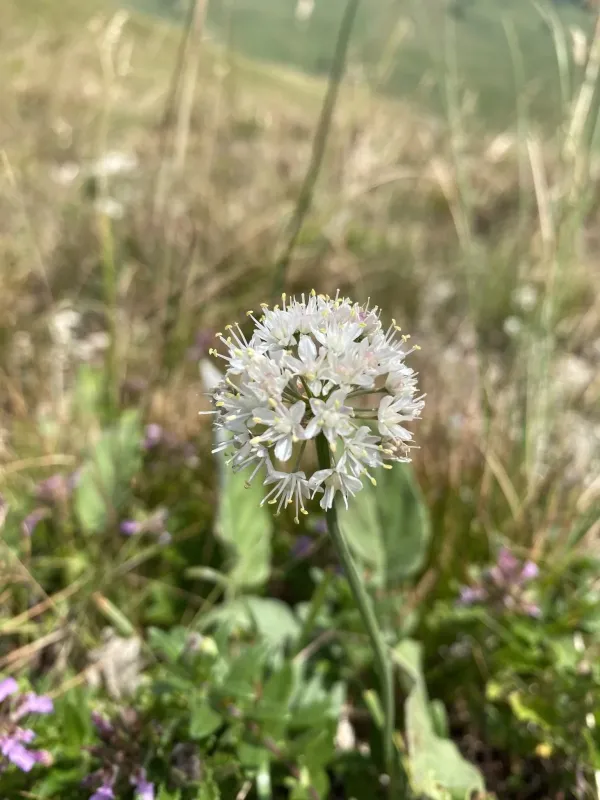
White onion (Allium denudatum) is a perennial herbaceous plant belonging to the Amaryllidaceae family. This species is native to Eurasia and is well-adapted to steppe and rocky environments, demonstrating remarkable resilience to harsh environmental conditions.
The plant features slender, grass-like leaves and produces small, whitish flower heads on stems reaching up to 40 cm. The bulbs are typically small and elongated, designed to survive periods of drought by conserving moisture in the root zone.
Cultivation requires well-drained, sandy, or rocky soil with a neutral to slightly alkaline pH. Exposure to full sunlight is essential for the healthy development of Allium denudatum, as shade may lead to stunted growth and reduced bulb formation.
In terms of agricultural techniques, it is crucial to avoid overwatering, as the species is highly susceptible to root rot when moisture levels are consistently high. Minimal maintenance is required once the plants are established, provided the soil remains aerated.
This crop is often utilized for its unique flavor profile, making it a valuable addition to gourmet vegetable gardens. It is also increasingly appreciated as an ornamental plant that can thrive in low-nutrient soil conditions where other varieties might fail.
Main diseases and pests
Common threats to Allium denudatum include fungal diseases such as fusarium wilt and various forms of basal rot. These are primarily caused by poor soil drainage and excessive soil moisture during the spring months.
Pests such as the onion fly (Delia antiqua) pose a significant risk to the plant's survival. The larvae of this pest tunnel into the bulb base, weakening the plant and eventually causing the foliage to wilt and die prematurely.
Thrips are another common issue, feeding on the leaf surface and causing a characteristic silvering or speckling of the foliage. These pests thrive in hot, dry conditions and can spread rapidly if not managed through proper monitoring.
Effective management strategies include the use of organic pest control methods and crop rotation, which helps break the lifecycle of soil-borne pathogens and pests. Ensuring proper air circulation around the base of the plants is also beneficial.
It is recommended to remove infected plants immediately to prevent the spread of diseases. A consistent hygiene program, including the removal of dead leaf litter, is essential to keep the crop healthy throughout the growing season.