
Acis ionica
Acis ionica
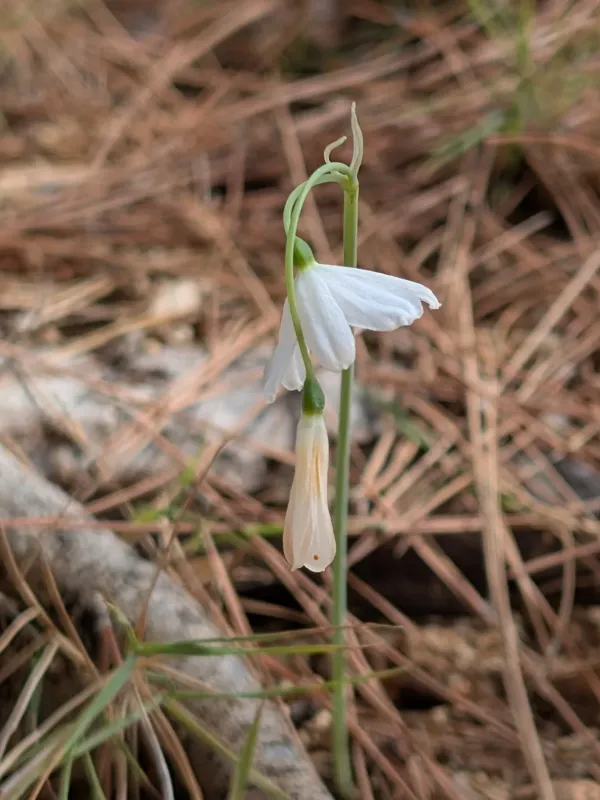
Description
Growing requirements
Acis ionica is a charming bulbous plant belonging to the Amaryllidaceae family. Primarily recognized as an ornamental species, it is highly valued by collectors and gardening enthusiasts for its delicate appearance and specific ecological niche.
The native distribution of this species spans the Ionian Sea regions, including Greece and parts of the Western Balkans. Its evolutionary history is deeply linked to the Mediterranean climate, where it thrives during mild, damp winters and enters a deep dormancy throughout the hot, dry summers.
Success in cultivating Acis ionica depends heavily on soil composition. The substrate must be exceptionally well-draining, as any stagnant water poses a severe risk of bulb rot. Gardeners often incorporate grit or coarse sand into the planting mix to replicate the plant's natural rocky, well-ventilated habitat.
Botanically, the plant is characterized by its compact habit, generally reaching heights between 10 and 20 centimeters. It produces slender, grass-like leaves and displays small, white, bell-shaped flowers on thin stalks that emerge in the early spring months.
Management practices require a strict adherence to the plant's natural cycle. During the growing season, consistent moisture is necessary, but as soon as the foliage begins to wither, all irrigation must cease. This summer dormancy period is crucial for the bulbs to store enough energy for the subsequent year's flowering cycle.