
Lipstick plant
Aeschynanthus radicans Jack
Description
Growing requirements
The Lipstick plant (Aeschynanthus radicans) is a notable member of the Gesneriaceae family. As an epiphytic species native to the tropical rainforests of Southeast Asia, it primarily grows on tree trunks and rocky crevices in its natural habitat.
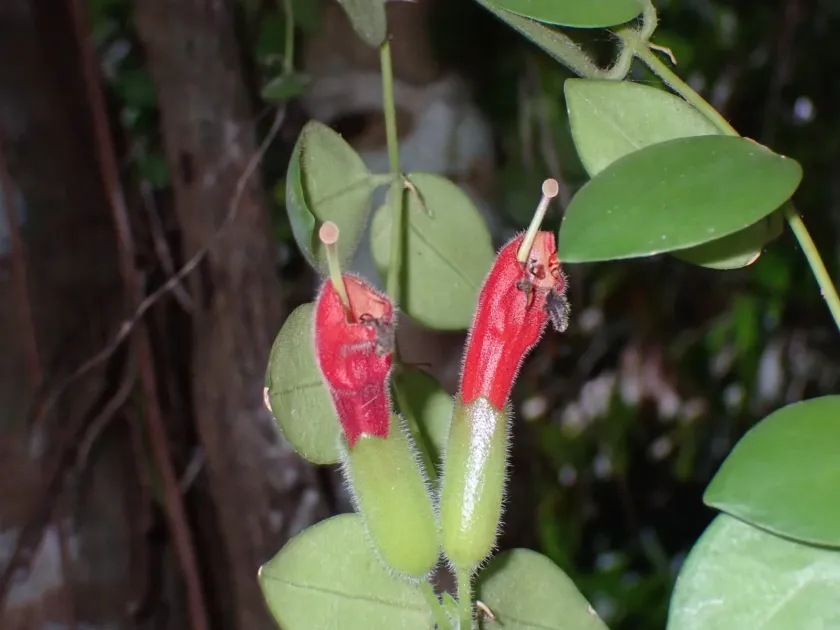
Botanically, this plant is characterized by its trailing stems and fleshy, waxy leaves. The common name refers to the distinctive bright red tubular flowers that emerge from dark, lip-shaped calyxes, resembling a lipstick tube.
Successful cultivation requires bright, indirect light. While it can adapt to lower light conditions, it needs sufficient intensity to bloom effectively. Direct afternoon sun can easily scorch the foliage, so positioning near an east-facing window is ideal.
The plant thrives in temperatures between 20°C and 25°C. It is highly sensitive to cold drafts, which can cause significant leaf drop and stress the plant, hindering its long-term growth and flowering potential.
The soil requirements focus on high aeration and drainage. A standard mix should include ingredients like peat moss, perlite, and orchid bark, creating an environment that mimics the plant's natural epiphytic surroundings.
Main diseases and pests
Common pests include spider mites, mealybugs, and scale insects. These pests are frequently attracted to the plant when ambient humidity levels are too low, which is a common issue in indoor environments during winter.
Fungal issues, particularly root rot, represent the primary health threat. This condition is almost exclusively the result of waterlogged soil or the use of a substrate that lacks proper drainage capacity.
Early symptoms of pest infestation include sticky residue on leaves (honeydew), small webbing, or visible clusters of insects in the leaf axils. Immediate isolation is necessary to prevent these pests from spreading to other houseplants.
Cultural control involves maintaining optimal humidity levels and ensuring the potting medium dries slightly between waterings, which helps significantly in reducing the incidence of fungal pathogens.
If chemical intervention becomes necessary, use gentle horticultural oils or systemic insecticides, ensuring that the product is safe for Gesneriad species to avoid phytotoxicity on the sensitive leaves.