
Aeschynanthus tricolor
Aeschynanthus tricolor Hook.
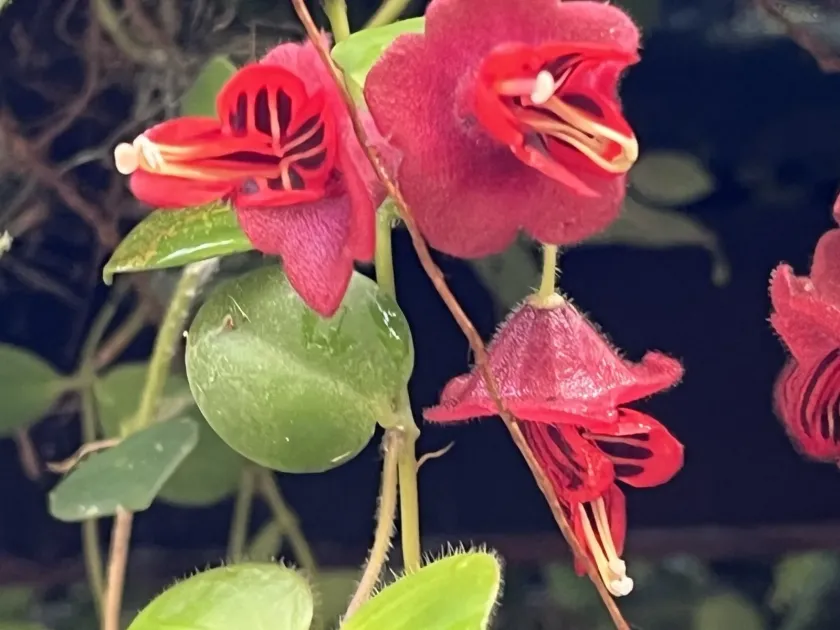
Description
Growing requirements
Aeschynanthus tricolor is a stunning ornamental plant belonging to the Gesneriaceae family. Originating from the tropical rainforests of Southeast Asia, this species naturally grows as an epiphyte, colonizing tree branches in humid environments.
The plant is characterized by its trailing, vine-like stems and thick, waxy, deep green leaves. Its botanical appeal lies in its unique, tubular flowers that display a striking combination of red, yellow, and dark-colored stripes, making it a favorite for vertical gardening.
In terms of cultivation, it requires bright, indirect light to thrive. Harsh, direct sunlight should be avoided as it can scorch the foliage. Placing the plant near an east-facing window is usually the most effective strategy for optimal light exposure.
The soil must be well-draining, light, and airy to mimic its natural environment. A mix containing peat, perlite, and bark is ideal for providing the necessary aeration for the root system, which is prone to rot if kept in dense, waterlogged soil.
Temperature and humidity are critical factors for this culture. It flourishes in consistent temperatures between 20°C and 25°C. High humidity levels are essential throughout the year; therefore, regular misting or the use of pebble trays is highly recommended for indoor growth.
Main diseases and pests
The most frequent pests affecting Aeschynanthus tricolor are spider mites and mealybugs. These pests thrive in dry conditions; therefore, maintaining an adequate humidity level is a primary cultural method of integrated pest management for this specific crop.
Root rot remains the most common disease threat, typically caused by overwatering or poor drainage. To prevent pathogen outbreaks, it is crucial to allow the top layer of the substrate to dry out slightly before the next irrigation cycle to ensure root health.