
Aeschynanthus speciosus
Aeschynanthus speciosus Hook.
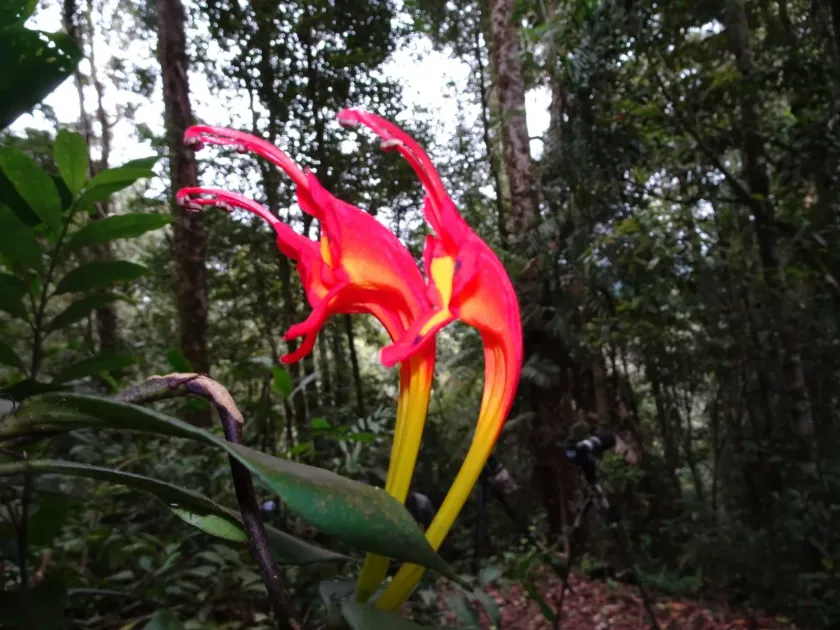
Description
Growing requirements
Aeschynanthus speciosus, commonly known as a type of lipstick plant, is a member of the Gesneriaceae family. It is an epiphytic plant native to the tropical rainforests of Southeast Asia, where it grows on branches and rocks, absorbing nutrients from decomposing organic matter.
The plant thrives in warm environments, ideally between 22 and 25 degrees Celsius. It is highly sensitive to cold drafts and sudden drops in temperature, which can trigger leaf drop and stunt growth during the peak vegetative season.
High relative humidity is essential for the health of this species. In indoor settings, maintaining humidity levels above 60 percent is crucial, often requiring the use of pebble trays, humidifiers, or frequent misting to mimic its natural tropical habitat.
A well-draining, acidic growing medium is required for Aeschynanthus. A mix of peat moss, pine bark, perlite, and charcoal works best, providing the necessary aeration for roots to prevent oxygen deprivation and fungal infections.
Lighting should be bright but filtered. Direct sunlight can scorch the succulent-like foliage, while insufficient light prevents the plant from setting flowers. During winter months, placing the plant in a bright south or east window is recommended to maximize light exposure.
Main diseases and pests
Spider mites are common pests that thrive in dry air conditions. Regular inspection and maintaining high humidity are the best preventative measures, while infestations may require the application of appropriate miticides or horticultural oils.
Root rot is the most prevalent issue, caused by overwatering or poor drainage. It is imperative to let the top layer of the soil dry out slightly between waterings, ensuring that the container has adequate drainage holes.
Mealybugs can often be found in the axils of the leaves. Manual removal with a cotton swab dipped in rubbing alcohol is an effective non-toxic treatment for minor infestations before they spread to other parts of the plant.
Gray mold (Botrytis) can develop in poorly ventilated areas with high humidity. Ensuring good air circulation around the plant helps keep the foliage dry and prevents fungal growth on the leaves and stems.
Nutrient deficiencies may occur if the plant remains in the same soil for too long. Periodic fertilization with a balanced, diluted liquid fertilizer during the growing season supports vibrant foliage and successful flowering cycles.