
Japanese maple
Acer palmatum Thunb.
Description
Growing requirements
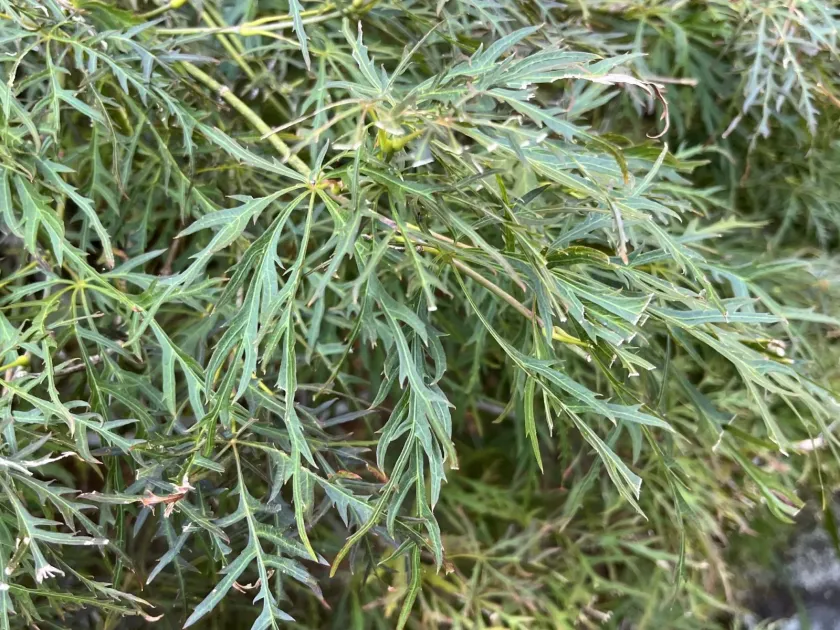
Japanese maple (Acer palmatum) is a deciduous shrub or small tree belonging to the Sapindaceae family. Native to Japan, Korea, and China, it is highly valued globally for its elegant, deeply lobed leaves and spectacular seasonal color changes.
The plant thrives in moist, well-draining, slightly acidic soil. Good aeration of the substrate is critical, as the roots are sensitive to waterlogging. Incorporating organic compost during planting helps improve soil structure and nutrient availability.
Optimal site selection involves choosing areas with dappled sunlight or partial shade. Exposure to intense afternoon sun can scorch the foliage, especially in warmer climates, while deep shade may lead to less vibrant leaf colors and slower growth rates.
Cultivation requires regular monitoring of soil moisture, particularly during the first years of establishment. Mulching with organic matter, such as pine bark or wood chips, is recommended to conserve soil moisture and suppress weed growth.
This species is widely utilized in landscape architecture, particularly for focal points, rock gardens, and container planting. Its aesthetic appeal makes it a staple in both private gardens and public spaces globally, often featured in bonsai art.
Main diseases and pests
Verticillium wilt is a serious fungal disease that causes branch dieback and, in severe cases, plant death. Management focuses on prevention, such as avoiding injury to roots and maintaining general plant health through proper fertilization.
Powdery mildew appears as a white coating on the leaves and is promoted by poor air circulation. Effective control involves fungicide application and strategic pruning to improve airflow through the canopy during the growing season.
Aphids can cause significant stress to young specimens by feeding on new growth. Regular inspections of the undersides of leaves allow for early intervention using soaps or horticultural oils to mitigate the infestation.
Scale insects may attach themselves to the stems and branches, resulting in stunted growth. They are managed by physical removal or the application of systemic insecticides when the pests are in their mobile crawler stage.
Spider mites are common in dry and hot conditions, causing the foliage to appear speckled and dull. Maintaining adequate humidity around the plant and proper irrigation are the first lines of defense against these pests.