
Meadow zizia
Zizia trifoliata
Description
Sowing dates
Sowing Meadow zizia seeds is best performed during the fall season to allow for natural cold stratification, which is essential for successful germination.
For those opting for spring planting, it is necessary to pre-chill the seeds in a refrigerator for at least 4 to 6 weeks to break their natural dormancy.
The seeds should be sown at a shallow depth of approximately 0.5 centimeters, as they require a certain amount of light to trigger the sprouting process.
Maintain spacing of 40 to 50 centimeters between individual plants to ensure proper aeration and to prevent the development of fungal diseases in the foliage.
Regular monitoring of soil moisture is crucial during the germination phase to ensure the young seedlings become established in the growing environment.
Growing requirements
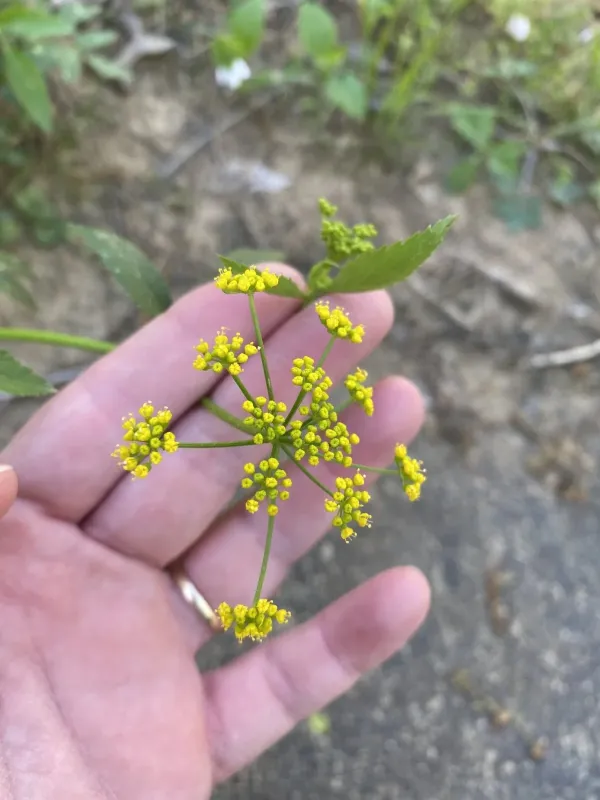
Zizia trifoliata, commonly known as Meadow zizia, is a perennial flowering plant belonging to the Apiaceae family, native to North America.
The plant thrives in partial shade to full sun, making it a versatile choice for various landscape applications ranging from woodland edges to open fields.
It prefers deep, rich, and moist soil that remains relatively cool throughout the growing season, mimicking its natural habitat conditions.
While the plant is quite hardy, it shows optimal growth rates in soils with a slightly acidic to neutral pH, which enhances nutrient uptake efficiency.
Mature plants are known for their resilience and ability to withstand occasional dry spells once their deep root systems are fully established in the ground.
Main diseases and pests
Powdery mildew is a common concern for Zizia trifoliata, particularly in areas with poor air circulation or high humidity levels during the warmer months.
Aphid infestations are frequently observed on the tender flower stalks, requiring early detection and potential intervention to prevent plant stress.
Larvae of swallowtail butterflies often feed on the leaves of this plant, which is natural but can cause significant defoliation if the population is dense.
Root rot remains the most significant threat if the planting site is poorly drained, as the plant cannot tolerate long periods of waterlogged soil.
Integrated pest management, including the removal of dead foliage at the end of the season, helps reduce the overwintering sites for potential pathogens.