
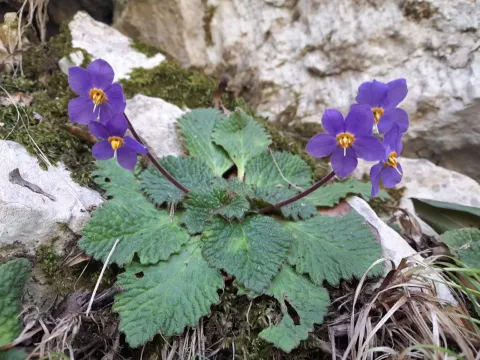
Jankaea
Jankaea
Jankaea (Jankaea heldreichii) is a monotypic genus of perennial flowering plants belonging to the Gesneriaceae family. It is a rare endemic species native exclusively to Mount Olympus in Greece, where it grows in limestone crevices.
What the section contains

Jankaea
Botanically, it is a small rosette plant characterized by thick, leathery leaves densely covered with silvery hairs. These hairs are an evolutionary adaptation that protects the plant from intense mountain sun and helps regulate moisture levels.
To cultivate Jankaea successfully, one must replicate its natural alpine habitat. This includes cool temperatures, high atmospheric humidity, and excellent air circulation to prevent heat stress and fungal issues.
The substrate must be extremely well-draining, consisting primarily of limestone chips and mineral components. Organic-rich soils should be avoided, as they hold too much water and can quickly lead to root rot.
Placement should be in a cool, bright location without direct sun exposure. Consistency in care is vital, as this slow-growing plant does not tolerate rapid changes in environment or soil moisture levels.
The most significant threat to Jankaea in cultivation is root and crown rot. This condition is triggered by excessive moisture and poor ventilation, which create a perfect environment for opportunistic fungi to colonize the plant.
High humidity is required for the leaves, but the crown of the plant must remain dry during irrigation. Water trapped between the leaves is a primary cause of rapid tissue decay and plant mortality.
Pests such as spider mites and mealybugs may attack the rosettes. Because the leaves are covered in delicate hairs, standard pesticide application can be tricky and potentially damaging to the plant's health.
Bacterial infections can appear as necrotic spots on the foliage, often following mechanical injury or environmental stress. Affected parts should be carefully removed to prevent the spread of the pathogen.
Proper hygiene, using sterile potting mixes, and ensuring optimal drainage are the best prophylactic measures to maintain the health of this delicate and rare botanical specimen.