
White Tephrosia
Tephrosia candida DC.
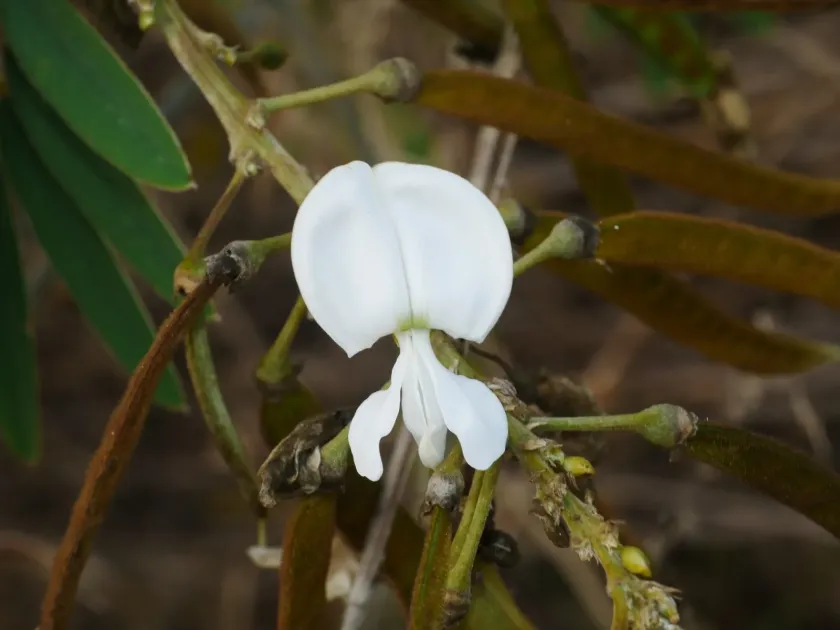
Description
Sowing dates
Sowing of White Tephrosia seeds is generally timed to coincide with the onset of the rainy season, ensuring the seedlings have adequate moisture for initial development.
Before planting, seeds often require scarification or hot water treatment to soften their hard seed coat and improve the overall germination rate significantly.
The seeds are typically sown in rows at a depth of about 2 to 3 centimeters, which provides the necessary soil warmth and protection against birds or drying out.
Depending on the intended use, seeding density is adjusted to either maximize biomass production for green manure or optimize conditions for seed multiplication.
Regular monitoring of moisture levels is crucial during the first weeks after sowing to guarantee uniform emergence and to avoid losses due to drought.
Growing requirements
Tephrosia candida is a perennial leguminous shrub known for its outstanding ability to fix nitrogen in the soil, which benefits subsequent crop rotation cycles.
The plant thrives in tropical and subtropical climates, requiring plenty of sunlight and a stable warm environment to reach its full vegetative potential.
While adaptable to various soil types, it prefers well-drained loamy soils with a slightly acidic to neutral pH for the best root and shoot development.
Once established, the plant shows excellent drought tolerance, allowing it to survive in regions with significant dry periods between rainy seasons.
Temperature sensitivity is a key factor; the plant performs best in a range of 22 to 30 degrees Celsius and is generally intolerant of frost or extreme cold.
Yield
The primary economic output of Tephrosia candida is its abundant biomass, which is harvested and used as green manure or high-quality mulching material.
Through periodic pruning, farmers can harvest multiple cuts of foliage per year, ensuring a steady supply of organic matter for field soil enrichment.
Yields of green mass typically range between 20 to 40 tonnes per hectare, depending on the climatic conditions and the intensity of the agricultural management.
Seed production is also highly efficient, allowing farmers to sustain their own supply chains for long-term cultivation without relying on external seed sources.
As a source of nitrogen, the decomposition of the plant residues provides a slow-release nutrient boost that is highly beneficial for nitrogen-hungry crops like maize.
Main diseases and pests
White Tephrosia is relatively robust, but it can be susceptible to fungal diseases such as powdery mildew in areas with poor airflow and high humidity.
Root rot represents a potential threat if the soil remains waterlogged, underscoring the importance of proper site selection and effective drainage systems.
Insect pests such as leaf-eating beetles and aphids can cause damage to young shoots, necessitating integrated pest management strategies to protect the crop.
Nematodes may occasionally become an issue in continuous monoculture systems, so rotating with non-legume crops is recommended to break the parasite cycle.
Routine scouting for signs of pest damage or foliage discoloration allows for early intervention, keeping the plant health in optimal condition throughout the year.
Harvesting
Harvesting biomass for fertilizer application is ideally performed during the pre-flowering stage, when nitrogen content is at its peak and fibers are still soft.
For seed harvesting, the pods are collected when they start to turn brown, but before they dry out completely to prevent natural shattering and seed loss.
Post-harvest handling requires careful drying of seeds in a shaded, well-ventilated area to maintain high seed viability and prevent fungal infections.
Mechanized harvest is possible using equipment calibrated for legume crops, though high-cutting heights are essential to preserve the main structure of the plant.
The root system, left in the soil after the final harvest, contributes significantly to soil structural integrity and continues to release nitrogen into the soil profile.