
Tephrosia vogelii
Tephrosia vogelii Hook. f.
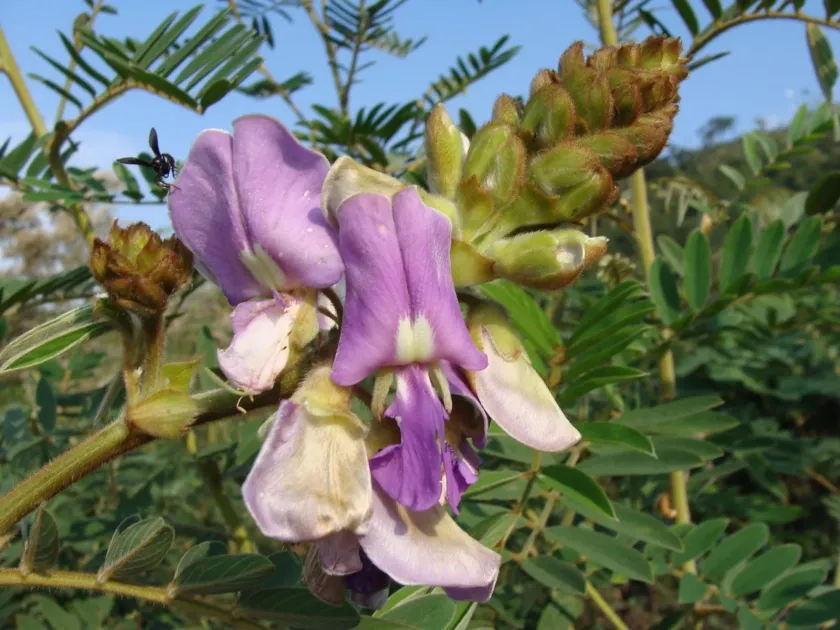
Description
Sowing dates
Sowing of Tephrosia vogelii is typically performed at the onset of the rainy season to provide sufficient moisture for germination. Seeds benefit significantly from scarification or soaking in warm water for 24 hours to improve uniformity.
The planting density is adjusted based on the objective: 50–70 cm between rows for biomass production, or closer spacing for use as a living fence or erosion barrier. Seeds are sown at a depth of 2–3 cm into prepared, well-tilled soil.
Seedlings emerge within 7 to 14 days, provided soil temperatures remain consistently above 20°C. Initial weed control is essential during the early stages, as the plant needs to establish its root system before rapid growth occurs.
Once established, the plant exhibits strong competitive vigor and quickly forms a dense canopy that suppresses most surrounding weeds. Regular monitoring for uniformity ensures that the stand density remains optimal for the intended purpose.
Intercropping with other cereals is a common practice, as the legume contributes nitrogen to the soil while the fast-growing nature of the species provides rapid soil coverage.
Growing requirements
Tephrosia vogelii is a perennial shrub of the Fabaceae family, flourishing in tropical and subtropical regions. It is highly sensitive to frost and requires a frost-free climate to survive and reach full maturity.
The species is remarkably adaptable, performing well in a variety of soil types ranging from sandy loams to heavier clays. It prefers neutral to slightly acidic soils with good drainage, as it cannot tolerate waterlogging.
Being a sun-loving species, it requires full sunlight for optimal biomass development. While it has moderate drought tolerance due to deep rooting, supplemental water during peak growing phases significantly boosts productivity.
The plant functions in symbiosis with rhizobia bacteria, which is crucial for its ability to fix atmospheric nitrogen and improve soil quality without heavy reliance on synthetic fertilizers.
Regular maintenance, such as pruning, helps maintain the plant's health and vigor, especially when it is utilized repeatedly for leaf harvesting or mulch production.
Yield
The biomass yield of Tephrosia vogelii is impressive, often reaching 20–40 metric tons per hectare per season. This makes it a preferred choice for improving soil organic matter content in degraded areas.
When harvested for its pesticidal properties, foliage is collected just before flowering, as this stage marks the peak concentration of rotenone and other active compounds within the plant tissues.
For soil improvement, the plant is typically cut and incorporated as green manure. This practice adds significant nitrogen and organic carbon, which are vital for increasing yields of subsequent food crops.
Seed yield is also substantial, allowing for easy propagation and multiplication of the species. Proper handling during the maturation phase ensures a high-quality seed bank for future agricultural cycles.
Sustainable harvesting techniques, such as coppicing (cutting back the stem to promote new growth), allow the farmer to maximize returns from a single planting over several years.
Main diseases and pests
Though the plant contains bioactive compounds, it is susceptible to specific root-knot nematodes, particularly when grown in continuous mono-cropping systems. Rotation with non-host crops is advised to manage these threats.
Fungal leaf spot diseases can become problematic in areas with poor ventilation or consistently high humidity. Ensuring proper air circulation between plants is the most effective cultural preventive measure.
Pests such as aphids and grasshoppers can infest younger plants, potentially causing stunted growth if not monitored. Localized treatment or manual removal of severely infested plants is often sufficient.
Root rot remains the most serious threat, usually associated with poor soil drainage. Keeping the planting site well-drained and avoiding excessive accumulation of standing water is essential for plant longevity.
Integrated pest management strategies are recommended, focusing on maintaining soil health and crop diversity to naturally suppress the buildup of pathogen and pest populations.
Harvesting
Harvesting for biomass or green manure occurs 3 to 4 months after sowing, when the plants reach their peak vegetative phase. This stage provides the best ratio of biomass volume to nutrient quality.
For pesticidal use, the leaves are hand-harvested and dried in shaded, ventilated areas. Drying must be done carefully to preserve the volatile and thermo-sensitive active compounds responsible for pest control.
Seed collection is timed once the pods turn brown and dry. Since pods can shatter naturally, harvest must be performed promptly to prevent loss, often in the early morning to retain pod integrity.
Once dried, pods are threshed and winnowed to separate the seeds. Proper storage in cool, dry conditions is necessary to maintain seed viability until the next planting season.
The woody residue remaining after harvest can be shredded and used as mulch, providing long-term protection against surface erosion and soil temperature fluctuations.