
Tephrosia purpurea
Tephrosia purpurea (L.) Pers.
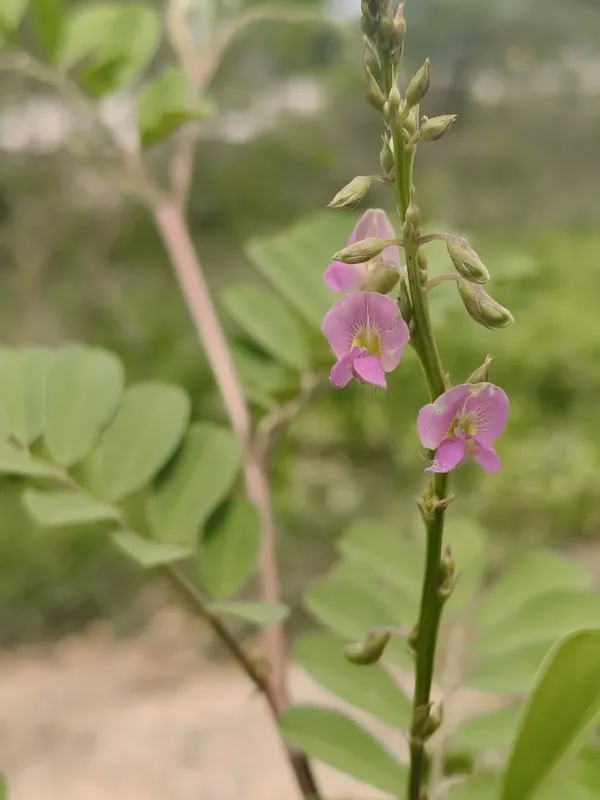
Description
Sowing dates
Tephrosia purpurea is a warm-season legume that thrives in tropical and subtropical climates. Sowing should coincide with the beginning of the rainy season to ensure optimal moisture levels for germination.
The soil should be prepared to a fine tilth, as this encourages the development of the primary taproot. Seeds should be planted at a depth of 1 to 2 centimeters to ensure protection while allowing for easy emergence.
Before sowing, seeds often require scarification to break their hard, water-resistant seed coats, which significantly improves the uniformity of field emergence.
Planting density is determined by the specific objective, such as biomass production or soil erosion control. Higher densities are preferred for cover cropping, while lower densities are standard for seed production.
Early-stage weed management is crucial for this crop, as initial growth is slow during the first few weeks after sprouting.
Growing requirements
As a resilient member of the Fabaceae family, this plant is well-adapted to harsh conditions. It possesses a deep taproot that allows it to survive periods of intense drought.
The crop is highly adaptable to various soil types, including sandy, loamy, and rocky soils. It performs best in soils with a neutral or slightly acidic pH level.
Full sun exposure is a requirement for optimal biomass development and flower production. Shade can drastically reduce the efficacy of the plant as a green manure or cover crop.
A key biological advantage of Tephrosia purpurea is its ability to form symbiotic relationships with nitrogen-fixing bacteria, which enriches the soil with nitrogen naturally.
Temperature is a major limiting factor for this species; it cannot tolerate frost, and sustained growth requires warm temperatures consistently throughout the season.
Yield
The biomass yield of Tephrosia purpurea is impressive, often providing substantial organic matter for soil improvement when incorporated as a green manure.
The crop is frequently used to manage soil fertility in agroforestry systems, where it acts as a nutrient recycler, bringing minerals from deeper soil layers to the surface.
Seed production is another viable output, with yields increasing when plants are grown in well-spaced rows to allow for maximum reproductive development.
Field studies demonstrate that integrating this crop into a rotation system can increase the yields of subsequent grain crops by improving soil structure and nutrient content.
Harvesting for biomass should occur at the onset of the flowering stage to ensure the highest nitrogen content in the tissues before the plant begins to lignify.
Main diseases and pests
Tephrosia purpurea contains secondary metabolites, such as rotenoids, which provide a significant level of innate resistance against various insects and pests.
The primary threats to the crop include root-rot diseases, which can become prevalent if the soil is poorly drained or stays waterlogged for extended periods.
Management of these threats is largely preventative; ensuring adequate drainage and maintaining appropriate plant spacing are the most effective strategies.
Occasional infestations of beetles or aphids can occur, particularly during the early vegetative stages, but rarely reach levels that require chemical intervention.
Its natural resilience makes it an ideal candidate for organic farming systems that prioritize ecological health over synthetic pest control methods.