
Welsh onion
Allium fistulosum L.
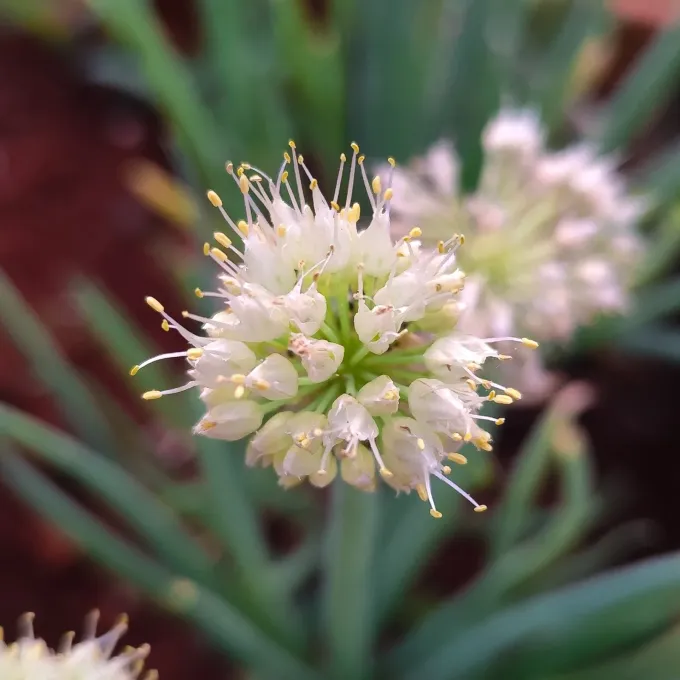
Description
Sowing dates
Welsh onion (Allium fistulosum L.) is a hardy perennial belonging to the Amaryllidaceae family, primarily grown for its edible green leaves. Planting can be performed in several cycles: in early spring, during summer for next-season harvesting, or in late autumn as a dormant seeding.
When sowing in spring, seeds should be placed in rows 20–30 cm apart at a depth of 1.5–2 cm. Adequate soil moisture is critical during the germination phase to ensure a high and uniform plant population.
Summer sowings require diligent irrigation practices, as the topsoil can dry out rapidly in heat, which risks the survival of emerging seedlings. Proper moisture management is the foundation of successful summer establishment.
Dormant winter sowing involves planting seeds into cold soil late in the season to ensure they germinate only when conditions become favorable in the early spring, leading to significantly earlier harvests.
Seedlings should be thinned once they establish, maintaining 5–10 cm spacing between individual plants. This spatial management allows sufficient room for the development of the bulbous stems and robust foliage.
Growing requirements
Welsh onions thrive in fertile, well-draining loamy or sandy soils with a pH ranging from neutral to slightly acidic. They are highly sensitive to waterlogging; therefore, raised beds are highly recommended in heavy clay soils or areas prone to high water tables.
The plant requires full sun for optimal photosynthesis and vigorous growth. While it tolerates partial shade, reduced light intensity will result in thinner, paler leaves and slower accumulation of biomass compared to plants in sunny locations.
The ideal temperature for active growth ranges between 18 and 25 degrees Celsius. However, the plant is remarkably frost-tolerant and can survive harsh winters in many climate zones, resuming growth immediately after the snow melts.
Regular irrigation is necessary to maintain leaf tenderness and prevent bitterness, especially during prolonged dry spells. Soil should remain consistently moist but not saturated to avoid root rot diseases.
Incorporating organic matter such as compost or well-rotted manure during pre-planting soil preparation is essential. Additionally, side-dressing with nitrogen-based fertilizers after each harvest cycle promotes rapid regrowth of the green shoots.
Yield
Yield potential is highly dependent on management intensity and soil fertility. While production is modest in the first year as the plant focuses on root system development, yield increases substantially in the second and third years.
Farmers can expect an average yield of 2 to 5 kilograms per square meter annually. The number of cuttings per season can range from two to four, depending on local climate and the specific horticultural regime employed.
For commercial production, it is vital to use high-vigor varieties that show rapid regrowth after cutting. This allows for frequent harvests and maximizes the overall productivity of the plantation area.
Plantations remain productive for approximately 5 years. After this period, overcrowding of the base stems often leads to smaller, thinner leaves, necessitating a move to a fresh planting site to maintain quality.
Maximizing yield also requires weed control in the early growth stages, as the plant is a poor competitor against aggressive weeds that can shade the developing seedlings and compete for water and nutrients.
Main diseases and pests
Common fungal diseases affecting Welsh onions include downy mildew (Peronospora destructor) and rust. These issues are most prevalent in high-humidity environments or where planting density is too high, preventing adequate air circulation.
Pest threats include the onion maggot, which damages the bulb base, and thrips, which pierce leaves and cause silvery streaks and tissue desiccation. Early detection is crucial for minimizing economic impact.
Prevention is key, involving strict crop rotation schedules that avoid planting Allium species on the same plot more frequently than every 3–4 years. Removing crop debris post-harvest also reduces overwintering sites for pests.
Integrated pest management (IPM) practices, such as utilizing biological controls or natural repellents like garlic extracts, can be effective in smaller-scale or organic operations.
Chemical intervention should be a last resort. If pesticides are necessary, strict adherence to pre-harvest intervals is essential to ensure food safety and regulatory compliance for market-bound greens.
Harvesting
Harvesting begins when the foliage reaches a marketable height of 20–25 cm. The greens should be cut cleanly with a sharp knife about 5–7 cm above the ground to preserve the basal plate and ensure future regrowth.
It is critical to harvest before the plant enters the bolting phase. Once flower stalks begin to emerge, the foliage texture becomes fibrous, the flavor sharpens, and the market value of the crop declines significantly.
Post-harvest handling is vital for shelf-life. Harvested onions should be sorted, cleaned of soil and yellowed leaves, and bundled for immediate distribution to maintain their crisp, fresh appearance.
Storage requires cool chain conditions, ideally keeping the product between 0 and 2 degrees Celsius. High humidity in storage helps prevent transpiration and the wilting of the delicate leaves.
Modern packaging using perforated plastic bags can help regulate gas exchange and maintain humidity levels, allowing for extended storage and better presentation for the end consumer in retail settings.