
Tenio
Weinmannia trichosperma Cav.
Description
Growing requirements
Weinmannia trichosperma, commonly known as Tenio, belongs to the Cunoniaceae family. It is a long-lived evergreen tree native to the temperate rainforests of Chile and Argentina, serving as a key element of the Valdivian forest structure.
This species thrives in a cool, humid climate with high annual precipitation. It lacks tolerance for prolonged drought or extreme aridity, making it well-suited for coastal environments that offer consistent moisture and cool temperatures.
The tree requires deep, well-drained, acidic soils rich in organic matter. While it prefers moist conditions, it is sensitive to waterlogged soils, which can lead to rapid root decline. Proper site selection focusing on elevation and soil texture is essential.
In terms of silviculture, Tenio is valued for its hard, durable wood, which is utilized in cabinetry, high-quality furniture, and architectural detailing. Its aesthetic appeal also makes it a subject of interest for ornamental landscaping in appropriate temperate zones.
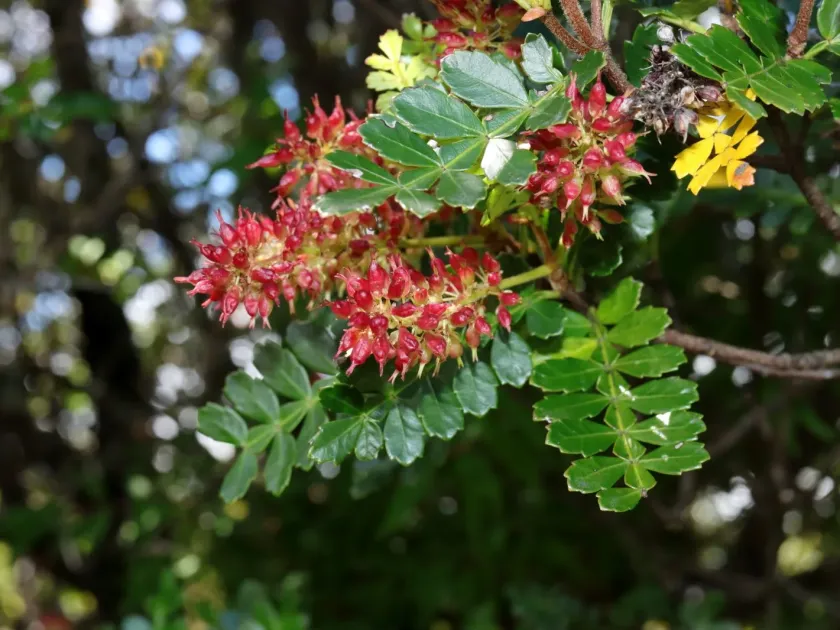
Botanically, it is identified by its compound, opposite leaves with serrated margins. The tree produces small, white, nectar-rich inflorescences that are attractive to pollinators, and the seeds are characteristically hairy, facilitating dispersal.
Main diseases and pests
The primary threats to this species include fungal infections such as Phytophthora root rot, which typically occurs if the soil drainage is compromised by mismanagement or environmental flooding.
Environmental stress caused by climate change, specifically the increasing frequency of droughts in its native range, poses a significant threat to the survival of natural stands and plantation health.
Insects such as leaf miners or wood-boring beetles can affect the tree's health, particularly if it is already weakened by environmental factors or improper site conditions.
Deforestation and habitat fragmentation remain the most severe long-term threats to the wild population of this tree, limiting its natural regeneration and genetic diversity.
To mitigate disease risks in a commercial setting, it is recommended to monitor the canopy density and ensure that the soil environment remains aerated to prevent the development of opportunistic fungal pathogens.