
Weinmannia racemosa
Weinmannia racemosa L. f.
Description
Growing requirements
Weinmannia racemosa L. f., commonly known as kamahi, is a prominent member of the Cunoniaceae family. Native to New Zealand, this evergreen tree plays a vital role in local temperate rainforest ecosystems.
The species thrives in cool, moist environments and is highly adaptable, ranging from sea level to mountainous areas. It requires high atmospheric humidity and is sensitive to prolonged periods of drought.
Regarding soil conditions, kamahi prefers fertile, well-drained, and acidic soils. It is particularly well-suited to forest floors rich in organic matter where moisture levels remain relatively constant.
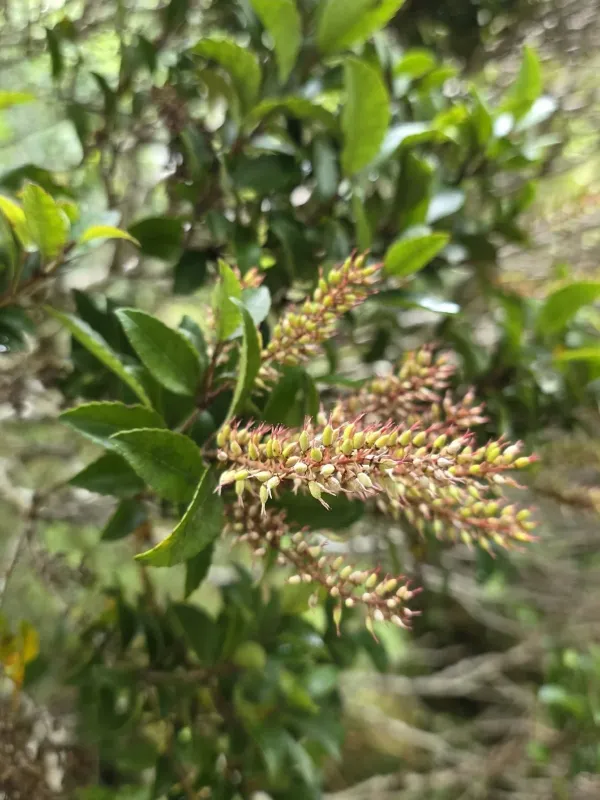
Botany-wise, the species is known for its racemes of small white or pinkish flowers. The foliage exhibits heterophylly, meaning leaves on juvenile trees appear significantly different from those on mature specimens.
For successful establishment in controlled environments, planting sites should offer partial shade during the initial growth stages to protect young seedlings from excessive solar radiation.
Yield
The primary economic output of Weinmannia racemosa is its timber. The wood is dense, even-textured, and reddish-brown, making it a valuable resource for furniture making, flooring, and interior joinery.
Beyond wood production, kamahi is highly significant as a nectar source. During its flowering season, it provides excellent forage for honeybees, resulting in a unique, highly-regarded monofloral honey.
Sustainable forest management practices are essential, as the species relies on natural regeneration, which requires specific light gaps in the canopy to ensure the survival of young saplings.
Recent studies also explore the potential for biomass utilization from sustainable forestry operations, contributing to regional energy needs while maintaining healthy ecosystem structures.
- Furniture manufacturing
- Honey production
- Pulp and paper industry
- Biofuel development
Main diseases and pests
The most significant threat to Weinmannia racemosa is the browsing damage caused by introduced mammalian pests, particularly the common brushtail possum, which consumes foliage and branches.
Young plants are susceptible to various fungal pathogens that can affect the root system, especially if the drainage at the planting site is poor or if soil aeration is compromised.
Insects, such as scale insects and leaf-eating beetles, can cause stress to the trees, leading to reduced vigor and stunted growth in nursery-grown or young plantation trees.
Environmental factors, including climate change-induced moisture stress, pose a long-term risk to existing forest stands, potentially altering the distribution of the species.
Integrated pest management, including habitat restoration and monitoring for early signs of disease, is crucial for preserving the health and productivity of these valuable trees.