
Barren strawberry
Waldsteinia ternata
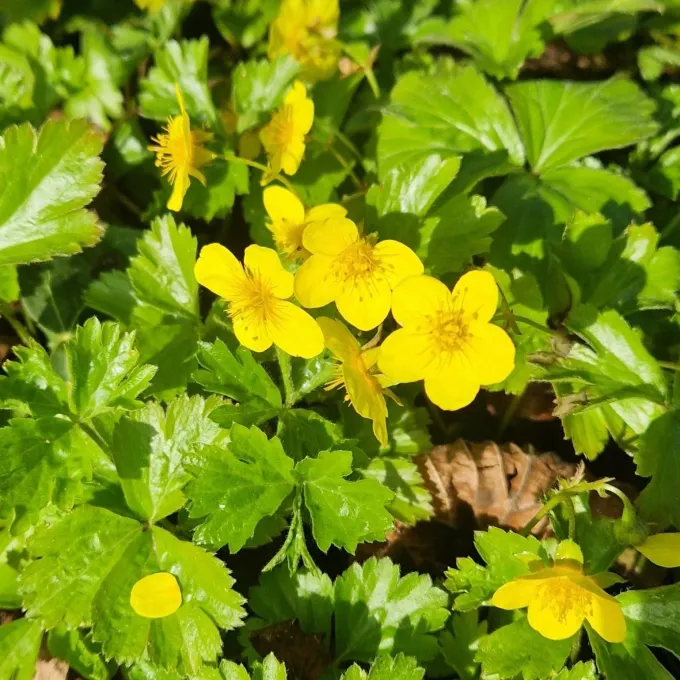
Description
Growing requirements
Waldsteinia ternata, commonly known as the barren strawberry, is a robust herbaceous perennial belonging to the Rosaceae family. It is prized for its ability to form dense, evergreen mats.
Native to temperate regions across Eurasia, including parts of Eastern Europe and Siberia, this plant thrives in forest habitats, making it an excellent choice for shaded or semi-shaded garden areas.
The plant has moderate requirements regarding soil quality; it prefers well-drained, fertile, and moist soil. It is highly adaptable and can grow in various soil types, from sandy loams to heavier garden soils.
Its climatic hardiness is one of its greatest assets. It withstands severe winters and maintains its foliage, which provides year-round ground cover and effectively suppresses weed growth.
Cultivation practices are straightforward. Once established, the plant requires very little maintenance, though periodic watering during intense summer heat will ensure lush growth and better coverage.
Main diseases and pests
Waldsteinia ternata is known for its remarkable resistance to common plant diseases. It is rarely affected by fungal infections, even in high-humidity conditions, due to its vigorous growth habit.
Pest pressure is generally minimal. The plant does not attract significant garden pests, allowing it to remain healthy and vibrant with little to no chemical intervention.
The main risk for this species is poor drainage. If planted in areas where water pools during winter, the root system may become susceptible to rot, which can thin out the density of the mat.
Occasionally, weeds that spread via underground rhizomes can penetrate the mat, so it is advisable to clear the area thoroughly before initial planting to ensure success.
No specific pruning is required, though tidying up damaged leaves in early spring can help rejuvenate the planting and promote fresh, dense growth for the upcoming season.