
Barren strawberry
Waldsteinia geoides
Description
Growing requirements
Waldsteinia geoides, commonly known as barren strawberry, is a perennial herbaceous plant belonging to the Rosaceae family. Native to Central and Southeastern Europe, it is well-regarded for its ability to form lush, evergreen carpets in woodland settings.
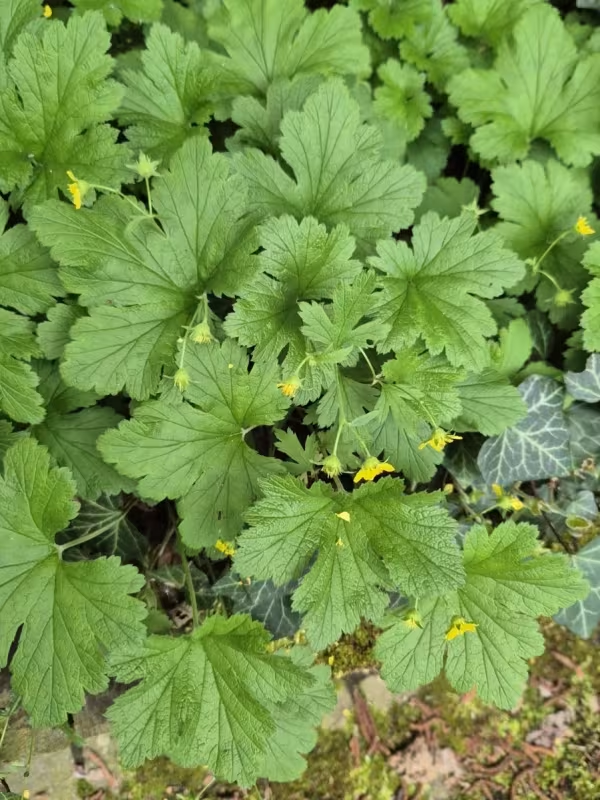
The plant features distinctively serrated, heart-shaped foliage that mimics the appearance of the genus Geum. Its primary growth mechanism is through creeping rhizomes, which allow the plant to spread steadily across the ground without becoming invasive.
When cultivating this species, it is essential to provide well-drained, humus-rich soil with a neutral to slightly alkaline pH. While it thrives in partial shade, it is quite adaptable and can tolerate sunnier spots if the soil moisture levels are consistently maintained.
The plant is exceptionally hardy and capable of surviving harsh winter conditions without specialized protection. Maintenance is generally low, requiring only periodic cleaning of dead foliage and minimal fertilization with organic compost during the early spring season.
Its primary use is in landscaping as a superior groundcover for difficult shaded areas, such as beneath established trees or on slopes where lawn grass would fail. Its consistent greenery and early-season yellow blossoms provide significant aesthetic value.
Main diseases and pests
Waldsteinia geoides is widely considered a robust plant with minimal susceptibility to pests and diseases. The most common issues arise from waterlogged soils, which can lead to root rot; therefore, ensuring proper drainage in planting beds is crucial for longevity.
Pest pressure is remarkably low, though young, succulent leaves may occasionally attract slugs and snails in humid spring conditions. Cultural controls, such as maintaining cleanliness in the garden beds, are usually sufficient to prevent any significant damage to the colony.