
Barren strawberry
Waldsteinia fragarioides
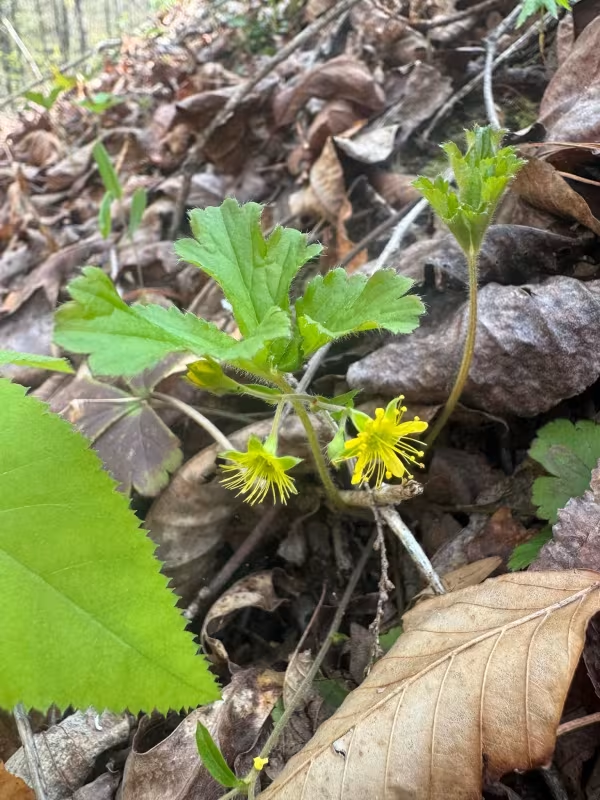
Description
Growing requirements
Barren strawberry (Waldsteinia fragarioides) is a member of the Rosaceae family. It is a robust, low-growing perennial species widely recognized as an excellent choice for groundcover in landscaping and gardening projects.
The plant originates from the woodland regions of North America, where it thrives in filtered light. Its natural adaptation to these environments makes it highly versatile for various climatic conditions in temperate zones.
For optimal growth, it requires well-drained, fertile soil with consistent moisture levels. While it is tolerant of different light conditions, it performs best in partial shade, reflecting its native woodland habitat.
Botanically, the plant is characterized by creeping stolons that root easily, allowing it to spread quickly and form a dense, uniform mat. The leaves are trifoliate, serrated, and resemble wild strawberries, though the plant is not grown for fruit production.
Agricultural management is minimal once established, focusing primarily on spacing during initial planting. The plant's aggressive growth habit effectively suppresses competing weeds, making it a low-maintenance solution for slope stabilization.
Main diseases and pests
While the plant is generally hardy and disease-resistant, waterlogged conditions can lead to root rot. Ensuring adequate soil drainage and avoiding overhead irrigation in the evenings can mitigate this risk.
Slugs and snails can pose a challenge by feeding on the foliage, particularly in damp and cool conditions. Implementing integrated pest management strategies, such as physical barriers, is effective for control.
Powdery mildew may occur if air circulation is poor or if the plants are placed in excessively humid environments. Pruning and thinning out overgrown areas can help maintain healthy airflow.
Grubs or soil-dwelling larvae may occasionally target the root system of younger plants. Monitoring the soil health before planting is recommended to prevent localized infestations.
Routine garden sanitation, including the removal of dead leaves, helps maintain plant vigor and reduces the overwintering sites for potential pathogens or garden pests.