
Volutaria muricata
Volutaria muricata
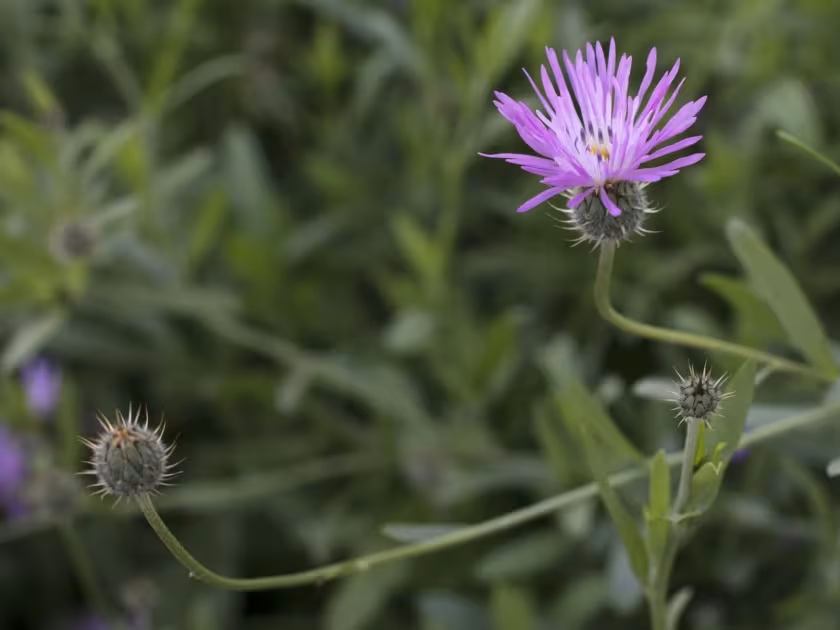
Description
Sowing dates
Volutaria muricata belongs to the Asteraceae family. It is an annual herbaceous plant that is increasingly viewed as a promising crop for arid regions, showing high adaptability to poor soil conditions.
The optimal sowing period occurs in early spring, once soil temperatures reach 10-12 degrees Celsius. Ensuring consistent moisture availability during the first few weeks after germination is crucial for developing a strong root system.
The crop thrives in open, sunny locations, as shading causes stem elongation and reduces flowering intensity. Planting is usually done in rows, spaced 45-60 centimeters apart, to provide adequate space for growth.
Seed depth should be 1-2 centimeters depending on soil texture. Lighter sandy soils allow for deeper sowing, while heavier clay soils require shallower placement to ensure successful emergence.
Seedlings typically emerge within 10-15 days after planting. A stand density of 15 to 25 plants per square meter is recommended to achieve a full and healthy plant cover.
Growing requirements
Volutaria muricata is extremely undemanding regarding soil fertility, making it suitable for cultivation on degraded or erosion-prone lands. The plant successfully tolerates soil salinity and exhibits a high degree of xerophytic adaptation.
The optimal pH range for normal crop development is between 6.5 and 8.0. The presence of lime in the soil positively influences the biochemical processes within the plant tissues.
The crop requires minimal rainfall during its active growth period. However, under conditions of severe drought, supplemental irrigation is necessary to preserve the viability of generative organs and ensure steady nectar production.
The temperature regime should be moderately warm to hot. The plant shows high resistance to hot dry winds and direct sunlight, making it valuable for greening arid and desert-like environments.
Management practices include mandatory inter-row cultivation to control weeds during the early stages of growth. Once the rows close, the plant naturally suppresses weeds through allelopathic activity.
Yield
The primary economic use of Volutaria muricata is as a nectar source for beekeeping. It serves as a valuable late-summer honey plant, providing a steady supply of resources during periods of nectar shortage.
The biological productivity of the green biomass can be significant when grown under irrigated conditions. The biomass can also serve as secondary raw material for compost production.
In ornamental horticulture, yield is measured by the number of inflorescences per bush. Proper care allows a single plant to form 30-50 flowering stalks with bright violet-pink flower heads.
Seed productivity is quite high, allowing farmers to independently replenish their seed stock for future seasons. Harvesting occurs once the flower heads have fully browned in dry weather conditions.
Utilizing Volutaria for land reclamation helps stabilize shifting sands and restore topsoil structure, providing an indirect but significant economic and ecological benefit.
Main diseases and pests
Typical diseases for Volutaria muricata include fungal infections such as powdery mildew and various types of rot, which often occur when soil remains excessively damp during prolonged rainy periods.
Among pests, leaf-chewing insects and aphids pose the greatest threat, potentially damaging leaves and buds during the active growth phase, which reduces both ornamental value and honey production potential.
To combat pests, the use of eco-friendly biological preparations is recommended to avoid negative impacts on honeybees. Chemical treatment is generally discouraged, as the plant is a significant honey source.
Disease prevention relies on crop rotation and preventing over-crowded planting. It is essential to remove plant residues at the end of the season to prevent pathogens from overwintering in the soil.
Early weed control significantly lowers the risk of secondary pest infestations, as many pests move to the crop from weeds within the Asteraceae family.
Harvesting
Seed harvesting is conducted mechanically or by hand during the wax ripeness stage. Untimely harvesting can lead to seed shedding, as the dried flower heads are quite fragile and prone to shattering.
After harvesting, the seed material undergoes a post-ripening stage in well-ventilated areas, protected from direct sunlight and high humidity to prevent spoilage.
Cleaning seeds from plant debris is carried out using sieves of various diameters or air separators. Storing the clean seed stock should be done in paper bags at stable temperatures.
When used as a honey plant, it is vital to leave the inflorescences until the end of the flowering period to provide bees with the necessary volume of nectar and pollen.
Following the growing season, plant residues can be shredded and incorporated into the soil as green manure, which contributes to enriching the soil with organic matter.