
Volutaria crupinoides
Volutaria crupinoides
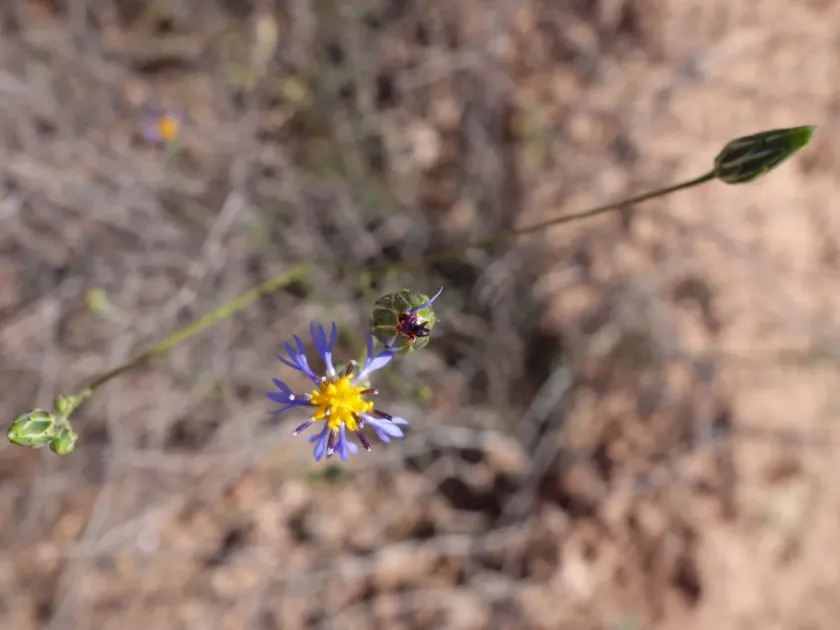
Description
Sowing dates
Volutaria crupinoides is an annual herbaceous plant belonging to the Asteraceae family. The germination of seeds typically occurs during the autumn and winter months, allowing the plant to establish a robust rosette before spring.
In agricultural settings, the seeds exhibit high germination energy under mild temperatures. The primary emergence period corresponds with autumn moisture, when the soil temperature remains stable within the optimal growth range of 10 to 15 degrees Celsius.
The seeding depth is generally shallow, ranging from 1 to 3 centimeters. Because the seeds are small, moisture at the soil surface is critical for triggering the germination cycle of this weed species.
Seed bank longevity is a significant concern for farmers, as Volutaria crupinoides seeds can remain viable for multiple seasons. This requires a long-term strategy in crop rotation to prevent massive infestations in successive planting cycles.
Emergence patterns should be closely monitored by agronomists to determine the ideal timing for pre-emergence or early post-emergence weed control treatments in cereal crops.
Growing requirements
The plant thrives in well-drained soils, typically preferring neutral to slightly alkaline pH levels. It is frequently found in Mediterranean environments characterized by rocky or loamy soil textures.
Volutaria crupinoides displays remarkable drought tolerance, supported by a strong taproot system. This allows the plant to access deep water reservoirs, enabling it to compete effectively with crops during dry growing seasons.
Light requirements are high, as the species is an obligate heliophyte. While it can persist in shaded conditions, its growth rate and reproductive success are significantly reduced compared to populations in full sun.
The plant is highly adaptable to various climatic zones, including arid and semi-arid regions. Its physiological plasticity allows it to withstand significant temperature fluctuations while maintaining vegetative activity.
In terms of soil fertility, the plant shows versatility, often colonizing disturbed sites. High nutrient levels may promote faster development, potentially leading to increased competition with primary agricultural crops.
Main diseases and pests
Diseases affecting Volutaria crupinoides are often associated with high humidity and fungal pathogens. Root rots and mildews may limit the growth of the weed in overly wet or poorly drained environments.
Pests, particularly aphids, may inhabit the plant during the vegetative phase. As a potential host, it can harbor various insects that may later migrate to commercially cultivated crops, necessitating integrated pest management.
Chemical control typically involves the application of selective herbicides during the early rosette stage. Choosing the right mode of action is crucial to maximize efficacy while protecting the main crop from damage.
Mechanical control involves cutting or tilling the plants before they reach the flowering stage. Preventing seed production is the most effective way to manage the long-term spread of this weed across the farm.
Integrated management plans combine deep cultivation with targeted herbicide use. Ensuring a clean field history through proper fallow management and rotation is essential for maintaining high crop yields.