
Volutaria lippii
Volutaria lippii
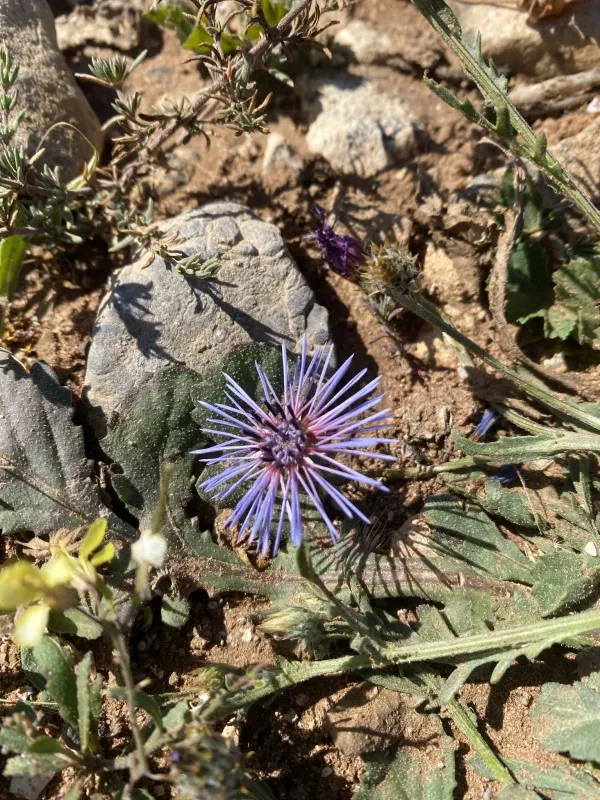
Description
Sowing dates
Volutaria lippii is an annual herbaceous plant belonging to the Asteraceae family. It is native to the arid and semi-arid regions of North Africa and the Middle East.
The plant is highly adapted to extreme environmental conditions, characterized by its short life cycle which allows it to thrive during brief periods of moisture availability.
Its biological structure includes a deep taproot system, enabling the plant to access water reserves stored in the deeper soil layers, typical for desert-adapted species.
Sowing should be synchronized with the onset of the wet season. This timing ensures that seedlings establish themselves before the onset of extreme heat and drought.
Seed germination in this species is quite robust, provided that environmental conditions mimic the natural fluctuations in temperature and humidity of its habitat.
Growing requirements
Volutaria lippii thrives in sandy and loamy-sand soils, which provide the essential aeration and drainage required to prevent root suffocation.
The plant is known for its tolerance to alkaline and moderately saline soil conditions, making it a potential candidate for land restoration projects in desert areas.
Climate requirements include high solar radiation levels. The plant performs poorly under shade and requires full exposure to sunlight for efficient photosynthetic activity.
Temperature range for active growth is between 20°C and 35°C. While it is heat-tolerant, it remains susceptible to frost and freezing temperatures, which can be lethal.
Agricultural management should prioritize minimal soil disturbance to maintain the natural moisture balance and soil integrity characteristic of arid ecosystems.
Yield
The primary agricultural use of Volutaria lippii is as a forage crop for livestock, particularly for camels, sheep, and goats grazing in arid pasturelands.
Yield stability is heavily influenced by annual rainfall, yet the plant remains a more reliable biomass provider than many non-native forage varieties in these zones.
The nutritional profile of the plant is adequate for supporting livestock maintenance and survival in harsh environments where other vegetation often fails.
Harvesting for forage usually occurs through managed grazing systems rather than mechanical harvesting, ensuring the plant can re-seed for the following season.
Ongoing agricultural interest focuses on its capacity to sustain grazing pressure in regions where traditional cultivation methods are economically unfeasible.
Main diseases and pests
The main threats to Volutaria lippii are fungal infections that arise during periods of excessive moisture or improper drainage in the cultivation area.
Pests such as aphids and various chewing insects can impact the foliage density, especially during the early vegetative development stages.
Root rots are the most dangerous threats to the crop, often caused by stagnant water or soil compaction leading to anaerobic conditions in the rhizosphere.
Integrated pest management should focus on monitoring the population levels of sucking insects to prevent widespread infestations in larger stands.
Maintaining soil health and avoiding excessive synthetic fertilization helps improve the natural resilience of the plants against typical biotic and abiotic stresses.