
Sida hermaphrodita
Sida hermaphrodita (L.) Rusby
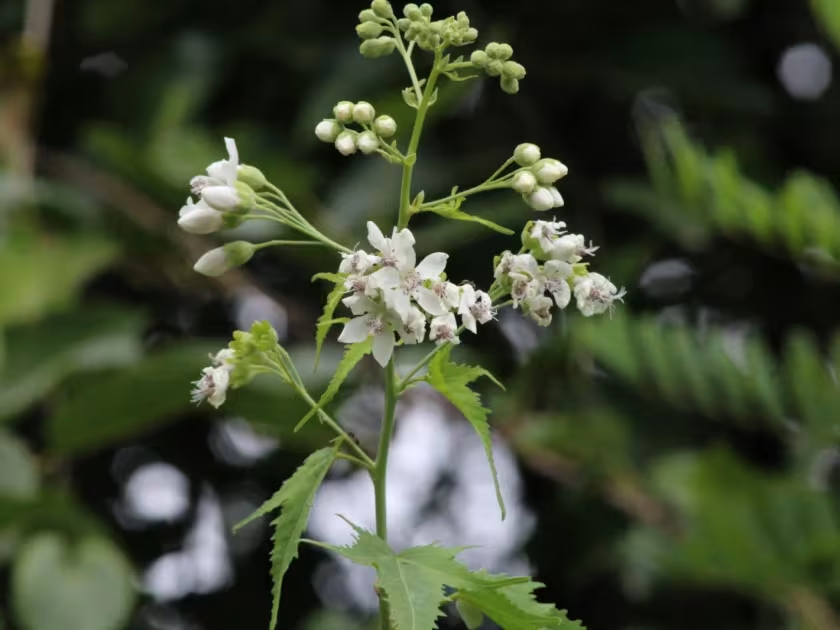
Description
Sowing dates
Sida hermaphrodita, commonly known as Virginia mallow, is a robust perennial herb belonging to the Malvaceae family that thrives in temperate climates.
Sowing is typically performed in the spring, once the soil has warmed sufficiently, ensuring that seeds have a good environment for uniform germination.
While direct seeding into the field is common, starting with seedlings can improve the establishment rate, especially in areas with significant weed pressure.
The seeds should be planted at a shallow depth of approximately 1 to 2 centimeters, as they require moisture and warmth to trigger the germination process.
Once established, the crop develops a deep root system that anchors the plant firmly in the soil, allowing it to survive for many consecutive years.
Growing requirements
The plant is highly adaptable and can grow in various soil types, although it performs best in deep, fertile soils with good moisture retention.
It displays remarkable frost resistance, enduring extremely cold winter temperatures without the risk of winterkill or significant crown damage.
Sida hermaphrodita is a sun-loving species that produces the highest biomass yields when planted in open, well-lit fields free from shading.
The crop is relatively drought-tolerant once established due to its extensive root system, though supplemental irrigation can boost early development.
Soil nutrient management, including the addition of organic fertilizers, supports the rapid biomass accumulation required for industrial energy production.
Yield
As a leading energy crop, Sida hermaphrodita produces impressive yields, often reaching 15 to 25 metric tons of dry matter per hectare annually.
Production levels remain consistent for 15 to 20 years, making it a highly cost-effective choice for long-term biomass and biofuel investments.
The stems contain high amounts of cellulose and lignin, providing excellent calorific values for burning in modern biomass power plants and boilers.
Beyond its energy potential, it serves as a high-quality forage crop, providing a significant protein source for cattle and other ruminants.
The long flowering period makes it an exceptional honey plant, attracting bees and beneficial insects that contribute to the local ecosystem biodiversity.
Main diseases and pests
This crop is naturally resistant to most common agricultural pests and diseases, which significantly reduces the need for synthetic chemical inputs.
Potential threats include early-stage weed competition, which can be managed through proper site preparation and early cultivation techniques.
Excessive waterlogging in poorly drained soils can sometimes lead to root rot, so choosing well-draining fields is essential for crop longevity.
Because the plant is not typically targeted by widespread agricultural pests, it serves as a sustainable option for reducing chemical runoff.
Integrated pest management strategies are rarely required, reinforcing the status of Virginia mallow as an environmentally friendly farming choice.
Harvesting
Harvesting for biomass fuel is usually executed during late autumn or early spring when the stems have naturally reached a low moisture content.
Standard farm equipment, such as forage harvesters, can be easily adapted to cut and shred the dense stalks into manageable pieces for storage.
When intended for fodder, the crop should be harvested just as flowering begins to capture the highest nutritional value before the stems become too woody.
Leaving a stubble height of about 15 centimeters is recommended to protect the base of the plants from cold exposure and support rapid regrowth.
Efficiency in harvesting is key to optimizing production costs, allowing farmers to deliver high-quality biomass to energy processing facilities.