
Sida rhombifolia
Sida rhombifolia L.
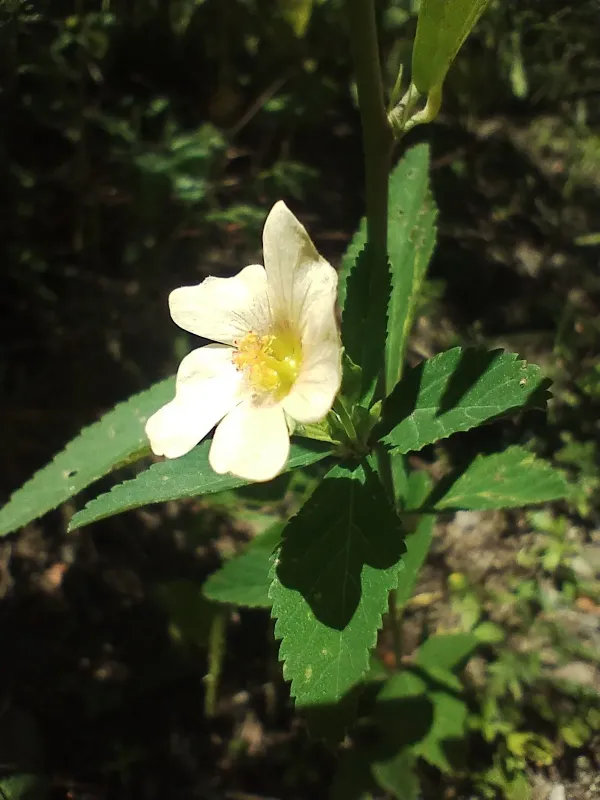
Description
Sowing dates
Sowing of Sida rhombifolia in suitable climates is carried out in the spring period when the soil warms up to temperatures above 15 degrees Celsius. To obtain uniform germination, seeds require high-quality pre-sowing preparation, including scarification.
The optimal planting depth is 1–2 centimeters, as small seeds have limited nutrient reserves. The choice of sowing dates directly depends on the moisture level of the topsoil and the absence of frost risk.
In industrial cultivation, a row seeding method is used with a seeding rate that ensures a plant density of approximately 300,000 to 400,000 plants per hectare. This helps to prevent excessive branching and ensures high-quality long fibers.
Seedlings appear 10–14 days after sowing, provided there is sufficient moisture. It is crucial to perform timely weed control during the early growth stages, as the crop grows slowly and competes poorly with other plants initially.
To accelerate plant development, intensive technologies involve applying starter doses of fertilizers containing nitrogen and phosphorus directly into the furrows during sowing.
Growing requirements
Sida rhombifolia, belonging to the Malvaceae family, is a tropical and subtropical plant. It prefers well-drained fertile soils with a neutral or slightly acidic reaction.
The crop is highly demanding in terms of thermal conditions: a sum of active temperatures above 2500 degrees is necessary for a full growth cycle. The plant can tolerate temporary droughts, but stable moisture is required for high biomass yields.
Light intensity plays a key role in the development of sida; it is a light-loving plant, so crowded stands in low-light conditions quickly lead to a loss of stem quality. Ideal plots are open, well-ventilated fields.
The plant adapts well to various soil types, ranging from light sandy loams to heavy loams, provided there is no waterlogging. Excessive soil moisture can lead to root rot and stunted development.
In terms of economic use, the plant is valued as a promising source of bast fiber, which is known for its high strength and rot resistance, making it a sustainable alternative to jute or kenaf.
Main diseases and pests
Sida rhombifolia crops are susceptible to various pests common to the Malvaceae family, including the cotton bollworm and various leaf beetles. These insects can significantly reduce green mass yields.
Among fungal diseases, leaf spot and anthracnose are the most dangerous, as they become active under conditions of high humidity. Pathogen outbreaks often lead to premature leaf drop.
Root rots can occur if agronomic practices are violated, particularly due to soil waterlogging. This environment triggers the growth of pathogenic fungi, causing plant wilting during the active growth phase.
For disease prevention, it is recommended to follow a crop rotation schedule, avoiding planting the crop in the same field for at least three years. Using healthy, disinfected seed material is also essential.
Systematic monitoring of crop health during the growing season allows for the timely application of fungicides and insecticides, minimizing yield losses caused by biological factors.
Harvesting
Harvesting of Sida rhombifolia is conducted during the mass flowering phase, when the content of high-quality fiber in the stems reaches its peak. At this stage, the fiber is at its most elastic and durable.
The harvest process includes mowing the standing crop followed by field drying or immediate primary processing. The use of mechanized mowers significantly accelerates the timeline of field operations.
After mowing, the stems undergo a retting process—soaking in water bodies or specialized tanks—to separate the fiber from the woody core. The duration of retting depends on water temperature and technical protocols.
Once dried and cleaned, the fiber is ready for further processing into textiles, ropes, or packaging materials. Production waste, known as hurd, is utilized as fuel or in the manufacturing of fiberboards.
The total yield of dry stems heavily depends on the level of agronomic management and climatic conditions of each specific season, averaging between 5 and 10 metric tons per hectare.