
Sida acuta
Sida acuta Burm. f.
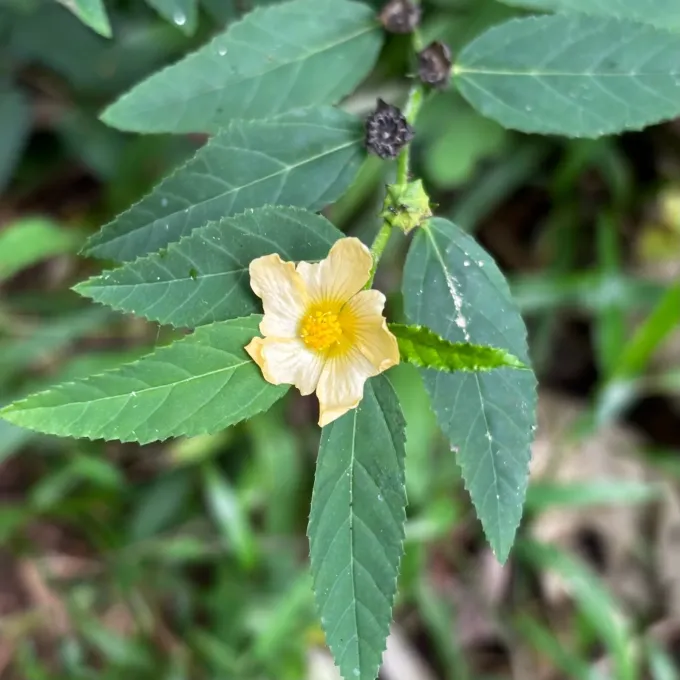
Description
Sowing dates
Sida acuta, commonly known as spinyhead sida, is a perennial subshrub belonging to the Malvaceae family. In tropical regions, the sowing process is typically timed with the onset of the rainy season to ensure optimal germination and establishment of young seedlings.
For direct soil sowing, cleaned seeds are used, often subjected to scarification to enhance germination rates. The seeds should be planted at a depth of 1–2 centimeters in well-tilled, loose soil to support early root development.
Row spacing during field cultivation is typically maintained between 50 and 70 centimeters, which facilitates essential maintenance activities and allows for mechanized weeding between rows. Planting density is adjusted based on the end goal, whether the crop is intended for fiber extraction or medicinal biomass.
The plant exhibits vigorous growth, with seedlings generally emerging within 7–14 days under favorable conditions. It is crucial to maintain a weed-free environment during the initial growth stages, as the plant is sensitive to competition during its early developmental months.
For commercial fiber production, high-density sowing is practiced, which encourages the growth of straight, vertical stems with minimal side branching, directly improving the quality and length of the extracted plant fibers.
Growing requirements
Sida acuta is a quintessentially tropical plant that thrives in warm and humid climates. It requires high average daily temperatures to flourish and is intolerant of frost or prolonged cold weather periods, which can severely stunt its growth or cause plant death.
Regarding soil conditions, the crop is relatively versatile but shows the best growth performance in well-drained loams and sandy soils with a neutral or slightly acidic pH balance. It avoids waterlogged areas where root health can be compromised.
The plant demonstrates high resilience to drought once it has completed its establishment phase. However, to maximize the yield of green biomass, consistent soil moisture throughout the active growing season is highly recommended.
This is a sun-loving species, so selecting planting sites with full exposure to sunlight is critical. Shading leads to elongated, weak stems and significantly reduces the total biomass production per unit area.
Under conditions of high fertility and moisture, Sida acuta can act as an aggressive colonizer. This ruderal tendency must be considered when designing crop rotations to prevent the plant from becoming a persistent weed in subsequent agricultural cycles.
Yield
The primary economic product of Sida acuta is its durable bast fiber, which possesses physical and chemical properties similar to jute. The yield of high-quality stems depends heavily on soil fertility, moisture availability, and appropriate planting density.
When harvested for medicinal purposes (leaves and roots), the yield is measured by the total volume of dried raw material. Strategic harvesting during the peak flowering stage ensures the highest concentration of alkaloids, such as cryptolepine, in the plant tissues.
Utilizing the plant as a source of green manure or as a controlled feed supplement also demonstrates high biological productivity, often reaching several tons of dry mass per hectare in optimal management systems.
Applying phosphorus and potassium-based fertilizers can significantly boost yield by supporting root system expansion and strengthening the mechanical structure of the stems, which is essential for consistent fiber quality.
Economic profitability is largely determined by the degree of mechanization in the harvesting process and the efficiency of on-site primary processing technologies, which minimize transport costs for bulky raw materials.
Main diseases and pests
Sida acuta possesses high natural resistance to many common agricultural pests, thanks to its high content of secondary metabolites, including potent alkaloids. This makes it a relatively low-maintenance crop in many environments.
However, in specific agro-climatic zones, damage may occur from leaf-chewing insects, such as certain species of caterpillars and beetles, which can reduce the leaf surface area and impede photosynthesis if infestations are heavy.
Fungal diseases, including leaf spot or root rot, typically arise only under poor management, such as inadequate drainage or excessive soil moisture on heavy clay soils. Proper water management is the primary defense against these issues.
To prevent the buildup of pathogens, it is recommended to implement effective crop rotation and ensure the timely removal of plant debris, which can serve as a reservoir for infection vectors during the off-season.
- Seed treatment to prevent soil-borne pathogens.
- Maintaining proper plant spacing for improved aeration.
- Monitoring moisture levels near the crown of the plant.
Harvesting
Harvesting stems for fiber production should occur at the early flowering stage. At this point, the bast fiber content in the stem is at its peak, and the stems remain flexible enough for extraction before excessive lignification sets in.
Plants are harvested using hand tools or mechanized mowers. After cutting, the stems are bundled and subjected to retting (soaking in water or dew-retting) to separate the valuable fiber from the woody plant tissue.
For medicinal raw material, leaves are collected during the flowering phase, while roots are harvested at the end of the vegetative season, when the accumulation of bioactive chemical compounds is at its highest.
Post-harvest, the plant material requires immediate drying in shaded, well-ventilated areas to prevent mold growth and the degradation of alkaloids, which are sensitive to direct, intense solar radiation.
Timely harvesting is a critical factor for success; delayed harvest leads to coarse fibers and a decline in the therapeutic potency of the medicinal parts, thereby significantly reducing the market value of the crop.