
Sida spinosa
Sida spinosa L.
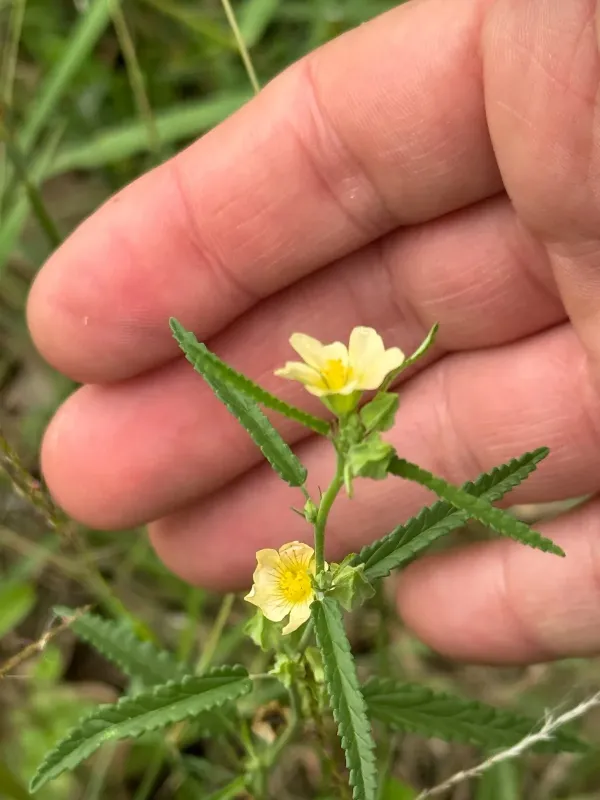
Description
Sowing dates
Sida spinosa is a warm-season annual that requires stable soil temperatures for successful germination. Sowing should commence in late spring once the soil temperature at a depth of 5–10 cm reaches at least 15–18 degrees Celsius.
Timing is critical to avoid late spring frosts that could stunt the initial growth of the plants. In temperate climates, mid-to-late May is generally considered the optimal window for planting, ensuring the crop has enough time to develop sufficient biomass before autumn cooling.
The recommended row spacing is between 45 and 60 cm to balance plant density and airflow. Proper spacing prevents the crop from overcrowding, which is essential for maintaining the quality of the bast fibers produced in the stems.
Seeds should be sown at a shallow depth of 1–2 cm. Excessive burial depth can significantly inhibit emergence rates and reduce seedling vigor, leading to uneven crop establishment across the field.
Pre-sowing treatments, such as scarification or priming, can help improve the uniformity of emergence. Establishing a dense and even stand at the beginning of the season is key to outcompeting weeds and maximizing total yield.
Growing requirements
As a member of the Malvaceae family, Sida spinosa thrives in sunny, warm environments. It is a highly adaptable plant, but it performs best when provided with high light intensity and sufficient warmth throughout its vegetative growth period.
The crop prefers fertile soils, including loams and well-drained silt soils, with a neutral to slightly acidic pH. Poor drainage is a significant limiting factor, as waterlogging can cause root rot and dramatically reduce overall plant health and stem quality.
While Sida spinosa is known for its resilience and drought tolerance, consistent soil moisture during the active growth phase is necessary for high yields. Supplemental irrigation during dry spells can significantly increase the total biomass production.
Regular cultivation between rows is essential for weed control and improving soil aeration. Keeping the field free of invasive species during the first few weeks is crucial, as the crop can be slow to establish initially but grows rapidly once established.
Fertilization should be managed carefully to promote stem elongation without sacrificing fiber quality. A balanced application of nitrogen, phosphorus, and potassium supports robust growth, while excessive nitrogen may lead to brittle fibers or lodging.
Yield
The yield of Sida spinosa is largely dictated by environmental conditions and the quality of field management. In well-managed crops, biomass production can reach 5–8 metric tons of dry stems per hectare.
Bast fiber is the primary industrial product, constituting approximately 15–20% of the dry stem mass. This fiber has properties similar to other Malvaceae-derived materials, making it a viable option for textiles, paper, and biodegradable composites.
Beyond fiber, the seeds are of interest due to their oil content and nutritional profile. Harvesting for seeds requires the crop to reach full maturity, which necessitates specific timing and combine settings to minimize seed loss during the threshing process.
Maximizing yield involves maintaining a consistent stand density, which encourages the plant to focus energy on vertical growth rather than excessive lateral branching. This results in longer, more uniform fiber strands.
Economic profitability can be significantly improved by implementing integrated processing systems. Utilizing the woody core of the stems for biofuel or mulch alongside the primary fiber production can enhance the total revenue per hectare.
Main diseases and pests
Sida spinosa can be affected by several pests common to the Malvaceae family. Aphids are frequently observed feeding on the undersides of leaves and on tender young shoots, causing stunting and potential transmission of viral diseases.
Spider mites often become a problem during periods of hot, dry weather. They cause chlorotic spotting on leaves, which reduces the plant's photosynthetic capacity and ultimately decreases the total fiber yield.
Fungal pathogens such as anthracnose or various leaf spot diseases can develop under conditions of high humidity and poor field ventilation. These diseases affect stem health and can severely damage the fiber quality.
Integrated Pest Management (IPM) is the most effective approach to protection. This includes regular scouting, proper crop rotation to break pest life cycles, and the use of resistant varieties where available.
- Maintain rigorous field hygiene by removing crop residues.
- Use cultural practices to increase plant vigor and resilience.
- Apply biological control agents where appropriate to manage aphid populations.
- Ensure optimal plant spacing to promote airflow and decrease humidity within the canopy.
Harvesting
Harvesting Sida spinosa for fiber is ideally timed at the beginning of the flowering stage. At this point, the stems have achieved optimal height, and the fiber strength and flexibility are at their peak for industrial processing.
Mechanical harvesting is typically performed with sickle-bar mowers or specialized forage harvesters. A clean, uniform cut is essential to allow the biomass to dry efficiently in the field before it is collected and baled.
After cutting, the material is allowed to field-dry to reduce moisture content, preventing rot and fungal growth within the bales. Bales should be stored in a dry, well-ventilated area to maintain the integrity of the fiber.
For seed production, the harvest is delayed until the seed pods are fully mature and dry. This requires careful coordination with harvesting equipment to ensure that the pods are threshed efficiently without losing seeds to the field.
Effective harvest management is vital for maintaining product quality. Proper timing ensures that the fiber remains clean and free from excess debris, which simplifies downstream processing and increases the market value of the crop.