
Vesicularia montagnei
Vesicularia montagnei
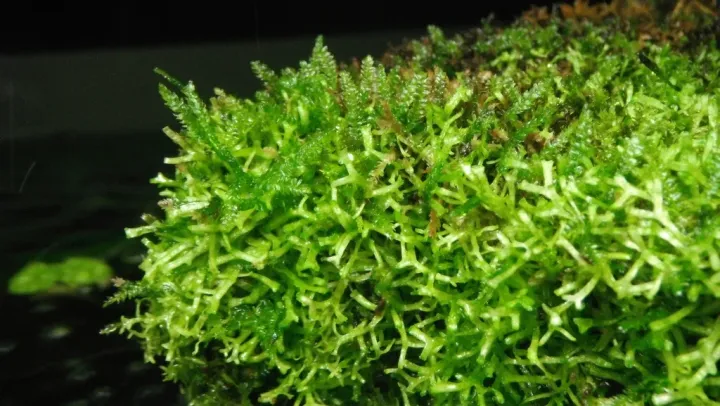
Description
Growing requirements
Vesicularia montagnei, widely recognized as Christmas moss, belongs to the Hypnaceae family. Originating from tropical Southeast Asia, it is a versatile aquatic bryophyte that thrives in shaded, humid habitats along riverbanks and rocky substrates.
Optimal growth requires a water temperature ranging from 18 to 25 degrees Celsius. The plant prefers slightly acidic to neutral water conditions with consistent circulation, which prevents the accumulation of detritus within the dense moss mat.
While Christmas moss can survive under low light, moderate lighting is recommended to maintain its characteristic compact, triangular branching pattern. Excessive light, combined with high nutrient levels, often leads to unsightly algae outbreaks that compete with the moss.
Unlike rooted plants, this moss absorbs nutrients directly through its leaves. Dosing with iron-rich liquid fertilizers and periodic CO2 supplementation can significantly enhance the vibrancy and growth rate of the culture in commercial aquascaping systems.
The cultivation process involves attaching small portions of the moss to driftwood or stone substrates using fishing line or specialized aquatic glue. Once the moss establishes its hold, it grows outward in dense, layered clusters resembling miniature fir trees.
Main diseases and pests
Algae infestations remain the primary threat to the health of Christmas moss. Hair algae and green spot algae can rapidly entangle the delicate fronds, effectively smothering the plant and restricting its access to necessary light and nutrients.
Water quality fluctuations, particularly spikes in ammonia or nitrate levels, can cause the moss to turn brown and degrade. Maintaining biological equilibrium is crucial to prevent the onset of necrotic patches within the moss colony.
Certain macro-algae eaters, like snails or specific crustacean species, may graze on the moss if their preferred food sources are scarce. This grazing can damage the structure and uniformity of the moss carpet, reducing its market value.
Lack of proper water flow can lead to stagnant zones where waste accumulates. This organic debris promotes the growth of pathogenic fungi and bacteria, which can quickly rot the base of the moss colony if not addressed promptly.
To maintain a healthy crop, growers should perform regular water tests and maintain strict hygiene when introducing new equipment. Quarantining new specimens is an essential practice to prevent the spread of parasites and harmful microorganisms.
Harvesting
Harvesting Christmas moss is performed through systematic pruning, which serves both to collect biomass and to promote better growth. Regular trimming prevents the inner layers of the moss from suffocating and encourages the development of new, healthy shoots.
Using precision scissors, cultivators trim the top layers of the moss mat. This process ensures the plant maintains its signature triangular shape, which is highly sought after for aesthetic purposes in the aquarium industry.
The harvested trimmings are viable for propagation. These fragments are spread onto new substrates, where they will adhere and begin a new growth cycle, allowing for a continuous production loop in controlled agricultural environments.
Post-harvest management is critical; the harvested moss must be kept moist at all times. Drying out leads to permanent damage to the cellular structure, making the product unsuitable for sale or further cultivation.
Cleanliness during the harvesting process helps maintain the water quality in the growing tanks. By removing debris immediately, the grower ensures that the remaining moss can recover quickly and prepare for the next harvest period.