
Weeping Moss
Vesicularia ferriei
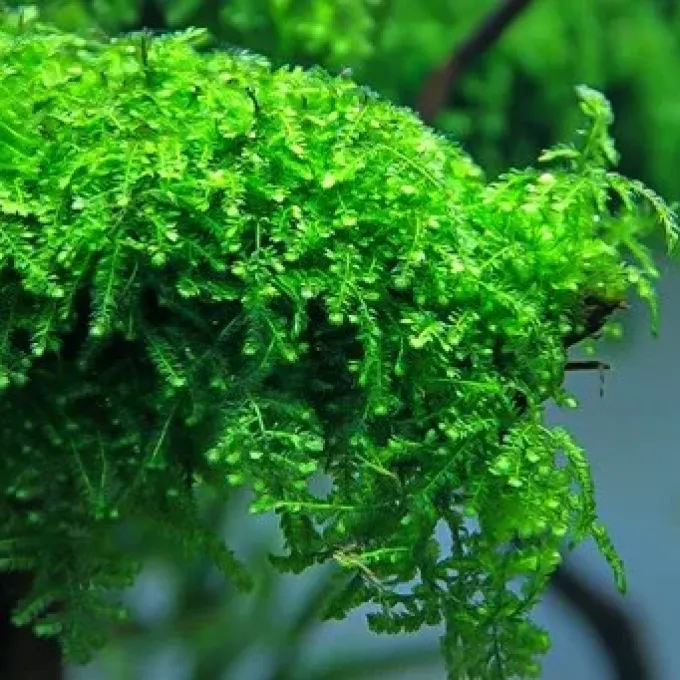
Description
Growing requirements
Vesicularia ferriei, commonly known as Weeping Moss, belongs to the Hypnaceae family. This bryophyte is native to East Asia, specifically regions within China and Japan, where it thrives in high-humidity habitats along streams and damp forest floors.
Cultivating this species requires precise environmental conditions, including a water temperature range of 18–28°C. Providing a consistent source of CO2 and moderate to high lighting is essential for maintaining its signature weeping growth pattern and vibrant green color.
Regarding soil and substrate, the plant does not require a traditional nutrient-rich substrate as it obtains nutrients directly from the water column. It is typically attached to hardscape materials like driftwood or volcanic rocks using specialized aquarium glue or fishing line.
Proper maintenance involves regular pruning to keep the cascading fronds dense and to prevent the lower layers from becoming too thick, which can lead to decay. Trimming also encourages the development of new, healthy lateral growth across the entire colony.
In terms of agricultural and hobbyist use, Vesicularia ferriei is a staple in high-end aquascaping for creating naturalistic, lush visual effects. Beyond aesthetics, it acts as a vital biological filter and provides essential shelter for small aquatic fauna and fry in breeding tanks.
Main diseases and pests
The most common threat to this moss is the encroachment of nuisance algae such as filamentous algae, which can choke the plant's delicate fronds. Preventing excessive lighting periods and maintaining stable water chemistry are crucial strategies for avoiding these outbreaks.
Furthermore, poor water flow can cause debris and organic waste to settle within the dense moss mat. This leads to hypoxic conditions that trigger the decay of the plant's base, necessitating thorough cleaning protocols to preserve the vitality of the entire aquascape colony.