
Vesicularia dubyana
Vesicularia dubyana
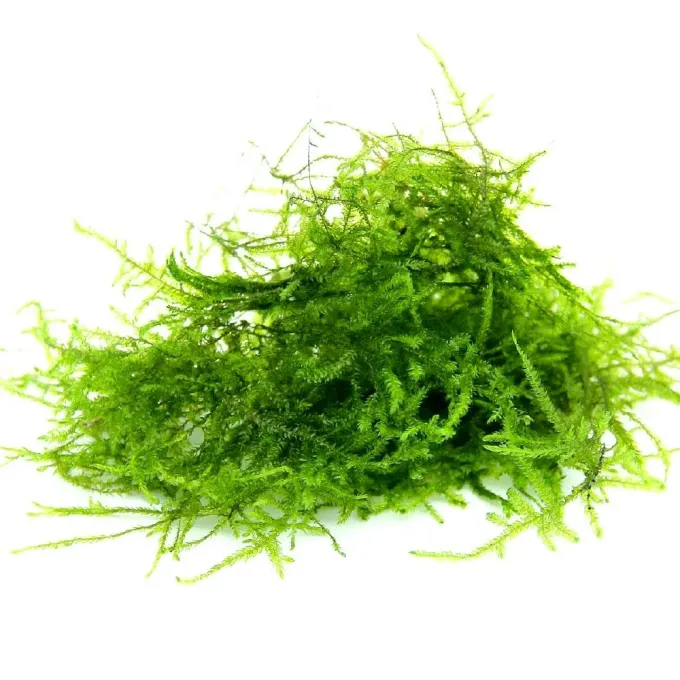
Description
Growing requirements
Vesicularia dubyana, widely recognized as Java moss, belongs to the Hypnaceae family. This bryophyte is indigenous to the tropical regions of Southeast Asia, thriving in high-humidity environments and shallow water bodies.
The culture is highly adaptable to various water parameters, showing optimal growth in temperatures ranging from 20 to 28 degrees Celsius. It is a robust species that can survive in a wide spectrum of water hardness levels.
As a non-vascular plant, Vesicularia dubyana absorbs nutrients through its leaves. While it does not require supplemental CO2 to survive, the addition of carbon and liquid fertilizers significantly increases biomass yield and growth rate.
Lighting requirements are moderate. The species grows well in low-light conditions, but higher intensities encourage more compact growth patterns. Excessive light, however, poses a risk of stimulating unwanted algae growth.
Propagation is primarily vegetative. By fragmenting the moss into small clusters and securing them onto rocks or driftwood, cultivators can initiate new colonies that grow into thick, carpet-like structures over time.
Yield
The yield of Vesicularia dubyana is measured by the rapid accumulation of fresh moss tissue. Commercial growers utilize controlled systems with high nutrient availability to harvest substantial amounts of moss on a monthly cycle.
Main diseases and pests
The primary threat to the crop is the encroachment of hair algae. Because both the moss and algae compete for similar niches, maintaining water chemistry stability is essential to prevent the moss from being smothered.
Another significant threat is the accumulation of detritus and organic debris within the dense moss mats. Without adequate water movement or regular cleaning, the base of the colony can succumb to hypoxia and decay.