
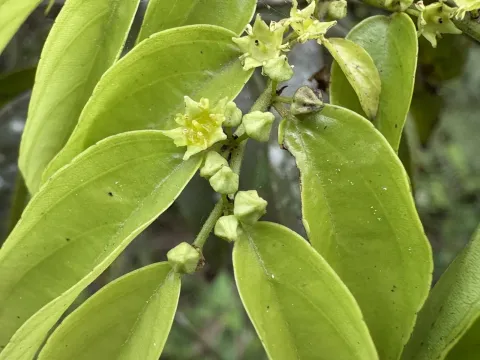
Ventilago
Ventilago
Ventilago is a genus of woody climbers belonging to the Rhamnaceae family. In their natural habitat, these plants propagate via wind-dispersed seeds, which feature distinct wing-like appendages allowing them to travel over significant distances.
What the section contains


Ventilago
In a controlled agricultural or nursery setting, propagation is often achieved through fresh seed sowing. Seeds must be planted immediately after harvest, as they are known to lose viability quickly if stored improperly under low moisture conditions.
The substrate for sowing should be loose, nutrient-rich, and well-draining to mimic the natural forest soil. Maintaining a constant tropical temperature of 25–28 degrees Celsius is essential for successful germination and early seedling development.
Vegetative propagation via cuttings is a common practice to maintain genetic purity and desired traits. Semi-hardwood cuttings are prepared and placed in high-humidity environments, such as greenhouses, to encourage rapid root initiation.
Proper spacing during the early stages of growth is vital to avoid overcrowding. Sufficient air circulation prevents the development of fungal infections, which are common threats to young vines in humid tropical environments.
As a tropical plant, Ventilago thrives in warm, humid climates and is highly sensitive to frost. It requires a stable environment where temperatures do not drop below the critical physiological threshold for tropical species.
Adequate sunlight is crucial for the development of these climbers. While they can tolerate partial shade in the understory of a forest, industrial plantations benefit from high light exposure to maximize biomass production.
The plant prefers fertile, loamy soils that provide good water retention while allowing excess moisture to drain away. It is highly intolerant of waterlogged soil, which leads to rapid root system decline and plant mortality.
Consistent watering is necessary, especially during the establishment phase. Irrigation systems should be designed to maintain uniform soil moisture without creating waterlogged conditions, which are particularly harmful during the rainy season.
Vertical support is an essential requirement for Ventilago, as the plant possesses a twining growth habit. Providing a sturdy trellis or pole system allows the plant to expand its leaf surface area, thereby increasing its overall growth rate.
The primary economic value of Ventilago lies in its bark and root system, which are processed to extract specific secondary metabolites. Harvesting is performed after the plant has reached a sufficient level of maturity.
Biomass production is directly influenced by soil fertility and irrigation practices. Fertilization with essential macronutrients, particularly during the active growing season, significantly enhances the yield of raw botanical material.
Plantation managers assess yield based on the total weight of harvestable bark per hectare. Through optimized planting densities and efficient vertical management, growers can achieve consistent yields over multiple harvest cycles.
The chemical concentration of target compounds in the bark is the primary indicator of quality. Proper timing of the harvest is critical to ensure that the active substances have reached their peak levels within the plant tissues.
Efficient post-harvest processing ensures that the yield remains high in quality. By categorizing the collected material by age and thickness, growers can maximize the value of their produce for pharmaceutical or industrial textile use.
Fungal diseases, including leaf spot and powdery mildew, are the most frequent threats to Ventilago plantations. These conditions are typically exacerbated by poor ventilation and excessive canopy humidity.
Pests, such as aphids and spider mites, pose a significant risk by feeding on young foliage. This damage can stunt plant growth and reduce the photosynthetic capacity, potentially impacting the overall chemical yield of the plant.
Root rot, often caused by pathogenic fungi in over-watered soils, is a severe threat that is difficult to remediate once established. Prevention through proper drainage and sanitation is the most effective management strategy.
Integrated pest management, including the use of biological control agents and organic sprays, is recommended to minimize chemical reliance. This approach helps maintain the ecological health of the plantation and the purity of the raw material.
Regular monitoring of plant health allows for the early detection and isolation of infected specimens. Prompt pruning of affected branches prevents the spread of pathogens throughout the entire plantation.
Harvesting the bark should occur during periods of lower sap activity to minimize plant trauma. Workers typically use specialized tools to remove sections of the bark without damaging the inner cambium layer unnecessarily.
After collection, the bark must be dried in shaded, well-ventilated areas. Direct exposure to sunlight should be avoided to prevent the degradation of heat-sensitive active compounds that give the plant its commercial value.
Seed collection is carried out when the fruit pods change color and begin to dry. Timely harvesting is essential, as the seeds are easily scattered by the wind once the pods are fully mature.
Storage facilities for the raw material must be kept dry and protected from pests. Proper packaging prevents moisture accumulation and subsequent mold growth, ensuring the product retains its properties during transport and storage.
Quality control standards during the harvest process ensure the end product meets the specifications required by the pharmaceutical industry. Sorting and cleaning the harvested material is a necessary step for high-value botanical markets.