
Ventilago leiocarpa
Ventilago leiocarpa
Description
Growing requirements
Ventilago leiocarpa belongs to the Rhamnaceae family. It is a robust woody vine that naturally inhabits tropical and subtropical forest ecosystems, predominantly found in Southern China and various regions across Southeast Asia.
The plant thrives in well-drained, fertile loamy soils with a neutral to slightly acidic pH. Successful cultivation requires a warm and humid climate with minimal temperature fluctuations and protection from strong winds that can physically damage the climbing stems.
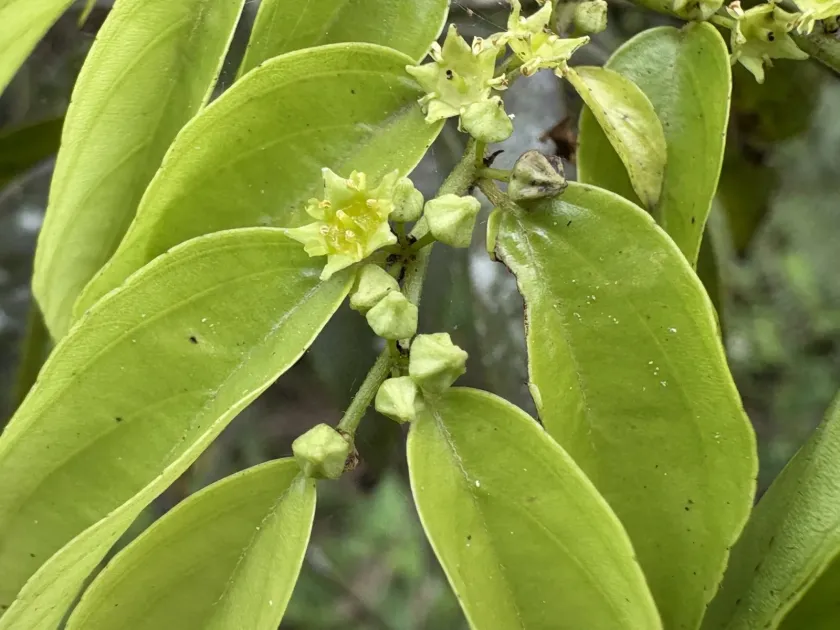
Botanically, the species is defined by its long, flexible stems capable of climbing to heights of 10 to 15 meters. The leaves possess a leathery texture and an oval or elliptical shape, adaptations that allow the vine to thrive in dense forest shade and optimize light capture.
Ventilago develops a deep and extensive root system, providing structural stability and the ability to access nutrients from deeper soil horizons. In an agricultural setting, the plant requires structural support, such as trellises or host trees, to facilitate healthy vegetative development.
The primary economic use of this crop centers on the harvest of its valuable plant materials. Both the bark and the roots of the vine are rich in bioactive compounds, specifically anthraquinones, which are utilized in traditional medicine for decoctions and medicinal extracts.
Main diseases and pests
Typical threats to this species include fungal infections that manifest under conditions of high soil moisture and poor air circulation. Primary pathogens include agents of powdery mildew and various forms of root rot that can compromise the plant during its peak growing season.
Among pests, sucking insects such as spider mites and scale insects represent the greatest risk, as they feed on the sap of young, tender shoots. Maintaining proper planting spacing and ensuring adequate airflow are essential preventive measures to manage these infestations effectively.