

Description
Sowing dates
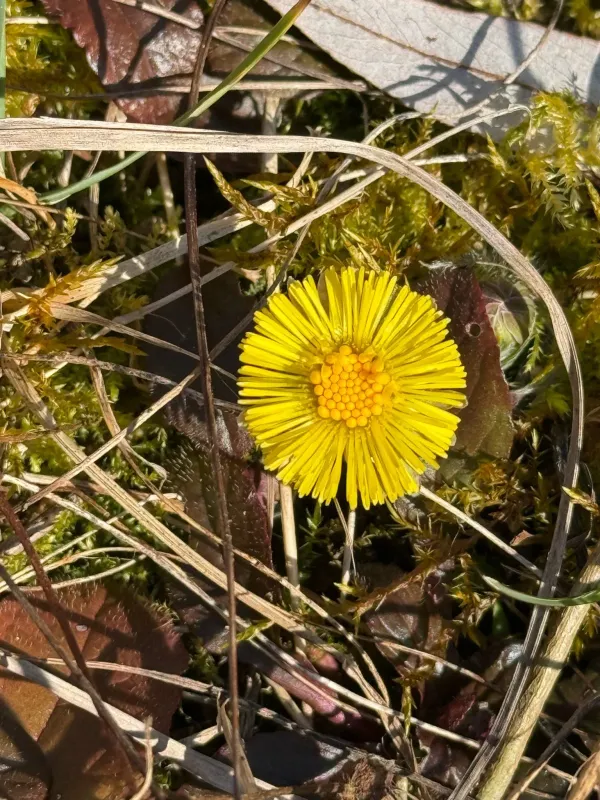
Coltsfoot (Tussilago farfara) is a perennial herbaceous plant belonging to the Asteraceae family. It spreads primarily through vigorous, creeping rhizomes, which can extend several meters underground, and through wind-dispersed seeds equipped with pappi.
Seed germination typically occurs in early spring, immediately following snowmelt. A single plant can produce thousands of seeds, making it a highly effective colonizer of disturbed or bare ground. In agricultural landscapes, it often appears on canal banks and uncultivated edges.
While rarely sown as a crop, propagation in botanical or medicinal gardens is achieved by dividing mature rhizomes in early spring or autumn. These segments must be planted in damp soil to ensure successful establishment.
The plant is considered a pioneer species. Its ability to thrive in poor, clay-heavy soils makes it one of the first plants to stabilize landslide-prone slopes or raw construction fills, acting as a natural erosion control mechanism.
Growth from seed requires minimal depth; seeds merely need contact with moist soil to germinate. Due to the short viability of seeds, they must find suitable conditions shortly after maturation, usually within a few weeks of dispersal.
Growing requirements
Coltsfoot thrives in moist, heavy, clay-rich substrates. It is commonly found in riparian habitats, wet meadows, and areas where water seepage makes the soil too difficult for other competing plant species to grow.
Sunlight is a crucial requirement for healthy development. While it can survive in partial shade, it requires open, sunny locations to produce flowers and reach its full medicinal potential, as shady conditions inhibit biomass production.
The plant prefers neutral to slightly alkaline soil conditions. It is a well-known calcicole, often found in regions with limestone outcrops, where the chemical composition of the soil supports its mineral uptake.
Regarding climate, Coltsfoot is exceptionally cold-hardy, adapting well to the temperate zones of Eurasia. It can withstand late spring floods and periods of waterlogging that would kill most other field crops.
Competition is its greatest weakness. In areas with dense, well-established turfgrass or thick ground cover, Coltsfoot struggles to compete and is gradually excluded from the habitat, making it a "weed of disturbance" rather than an established meadow species.
Yield
Coltsfoot is valued for its medicinal properties, specifically the leaves and flower heads. The yield depends heavily on the ecological health of the collection site and the timing of the harvest relative to the seasonal growth cycle.
In optimal conditions, dense patches can yield significant quantities of biomass. However, commercial harvesting must be balanced with the need to maintain the sustainability of the population, as over-harvesting leads to the death of the rhizome system.
Yield quality is measured by the absence of fungal pathogens and the specific leaf size. Leaves collected during the peak of summer (June-July) are preferred, as they provide the highest concentration of active compounds like mucilage and tannins.
The drying ratio for leaves is roughly 5:1. Proper drying techniques are essential to maintain market-grade quality, as the leaf's white, woolly underside is prone to discoloration if exposed to excessive moisture during the processing phase.
In a field crop context, Coltsfoot is usually seen as a productivity reducer. Infestations can lower the overall yield of cereals or row crops by competing for moisture during critical periods of the growing season.
Main diseases and pests
Rust fungus (Puccinia tussilaginis) is the most significant disease, manifesting as bright orange pustules on the abaxial side of the leaves. Infected leaves become brittle and lose all commercial value for medicinal use.
Powdery mildew often attacks the plant during late summer if the weather is dry and hot. This can lead to premature senescence of the foliage and a reduction in the plant's ability to store energy in its rhizomes for the following year.
Pests such as aphids may infest the flower stalks, draining nutrients during the early spring. While generally not lethal to the plant, heavy infestations can reduce seed production and impact the health of the individual plant.
Controlling Coltsfoot as a weed requires deep tillage. Because it regenerates from small rhizome fragments, surface hoeing is ineffective and may even increase the density of the colony by spreading the plant parts.
Chemical control usually involves systematic herbicides applied at the peak of the growth stage. However, the best management strategy in organic systems is the competitive planting of dense, fast-growing cover crops that shade out the Coltsfoot.
Harvesting
Flower heads are harvested in March and April, shortly after they emerge from the soil. They must be collected while still tightly closed, before the petals fade and the pappi (the white fluffy part) begin to develop.
Leaf harvesting takes place from June to July. Only healthy, middle-sized leaves are selected. One must never pick the entire plant; leaving enough leaf surface is crucial to support the plant's vitality for the next season.
Tools such as scissors or hand sickles should be used to avoid pulling up the rhizomes. Harvesting should be performed on a dry, sunny day to prevent the leaves from fermenting or turning black during the initial drying process.
Upon collection, the material should be spread in a single, thin layer in a well-ventilated, shaded area. Direct sunlight should be avoided to preserve the leaf's green color and pharmacological integrity.
Finished raw material is stored in airtight, cool, and dry containers. Proper storage prevents pests and humidity-related spoilage, ensuring the product maintains its shelf life for the pharmaceutical market.
Reference
Connections · Coltsfoot
Most often together:
Marketplace
