
Tromotriche revoluta
Tromotriche revoluta
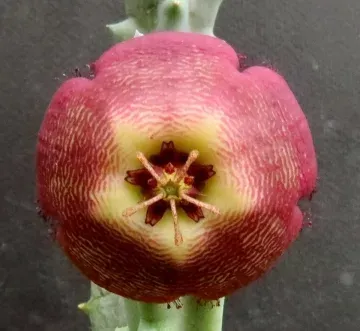
Description
Growing requirements
Tromotriche revoluta is a succulent species belonging to the Apocynaceae family, native to the arid regions of Southern Africa. Its biology is adapted to environments with irregular rainfall and high light intensity.
Cultivation requires a specific light regime to maintain the plant's structural integrity. While direct sunlight is generally beneficial, intense heat during midday can cause significant epidermal stress, necessitating light filtering.
The substrate must be highly mineral-based to replicate the natural habitat. A mix consisting of volcanic rock, coarse sand, and a minimal amount of organic matter is ideal for ensuring proper gas exchange at the root level.
Temperature management is critical for the species. During the growing season, it thrives in warm conditions, whereas the dormant winter season requires cool temperatures to trigger natural metabolic deceleration.
Watering frequency should be strictly regulated by the evaporation rate of the soil. The plant is prone to root asphyxiation if water is retained in the root zone for prolonged periods, especially in low light conditions.
Main diseases and pests
Fungal pathogens associated with high moisture levels are the most significant threats to the species. These pathogens often target the roots and the base of the stems, leading to irreversible decay.
Mealybugs are common pests that hide in the crevices of the succulent stems, making them difficult to detect until the plant shows visible signs of infestation or stunted growth.
Spider mites represent another challenge, particularly in greenhouse environments with stagnant air. Maintaining a consistent but moderate level of airflow helps to mitigate the risk of these infestations.
Integrated pest management strategies are recommended, starting with careful inspection of all new additions to the collection and manual removal of minor pest clusters before they spread.
Application of fungicides and insecticides should be performed with caution. Given the succulent nature of the tissue, certain concentrated solvents in pesticides can cause severe phytotoxic damage.