
Trisetaria scabriuscula
Trisetaria scabriuscula
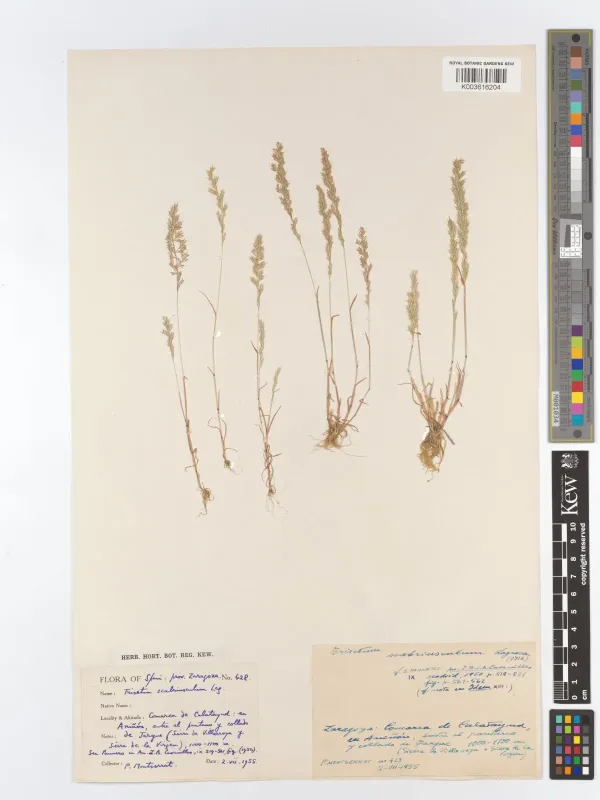
Description
Growing requirements
Trisetaria scabriuscula is a grass species belonging to the Poaceae family. It is typically found in Mediterranean climates and Mediterranean-influenced environments, where it plays a functional role in the structure of natural grasslands and arid steppe-like ecosystems, contributing to soil stability.
The plant originates from regions characterized by long, hot summers and mild, wet winters. Its geographical range primarily encompasses rocky terrains and slopes where other more sensitive grass species struggle to establish themselves. It is highly adapted to areas with limited water availability during the peak growing season.
Botanically, the species is defined by its scabrous (rough) stems and leaves, which serve as an adaptation to reduce transpiration. The inflorescence is a panicle that produces small seeds capable of dispersal by wind. These features allow the plant to thrive in exposed, sun-drenched environments where drought tolerance is essential for survival.
Regarding environmental requirements, this grass favors well-drained, alkaline, or stony soils. It thrives in open sunlight and does not tolerate competition from taller, more aggressive vegetation in nutrient-rich or waterlogged habitats. Its root system is designed to exploit deep moisture reserves in challenging soil types.
Economically, Trisetaria scabriuscula is utilized primarily as a forage source for small ruminants in extensive grazing systems. While not cultivated as a major crop, its presence in natural meadows is highly valued for its soil-binding properties, which prevent erosion on steep and marginal lands within its native range.
Main diseases and pests
Common threats to this species include fungal infections such as rusts and powdery mildew, which can occur during unusually humid or wet spring periods. While these pathogens can affect foliage, the overall population typically recovers quickly due to the plant's inherent resilience and adaptability to seasonal fluctuations.
Insect pests such as grass-feeding aphids and stem-boring larvae may affect individual plants. However, the plant's rough texture and adaptation to low-nutrient environments often deter heavy herbivory, allowing it to maintain its presence in stable communities without requiring intensive chemical interventions or agricultural management.