
Low bulrush
Trichophorum pumilum
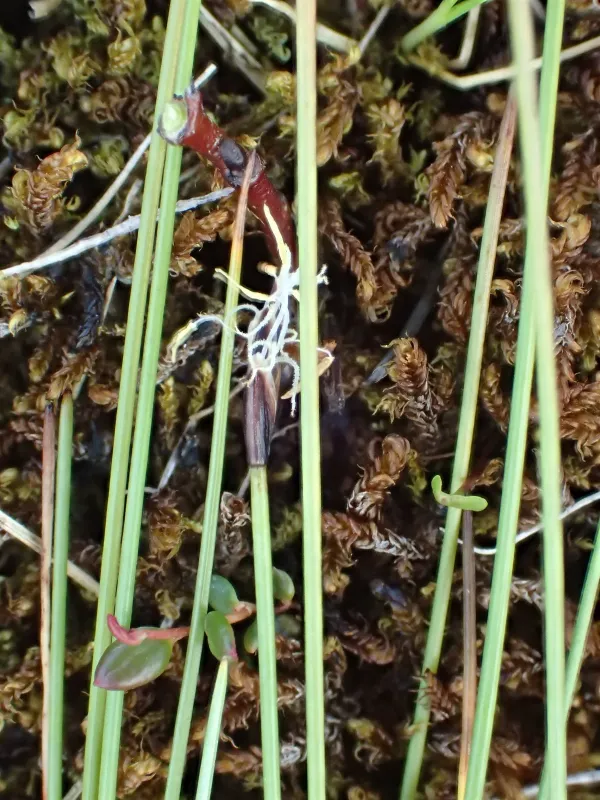
Description
Growing requirements
The low bulrush (Trichophorum pumilum) belongs to the sedge family (Cyperaceae). This perennial plant is highly specialized and thrives in specific ecological niches where moisture is constantly available.
Geographically, the species is distributed throughout the northern and temperate regions of Eurasia and North America. It is typically found in high-altitude marshes, fens, and areas surrounding cold springs, indicating its preference for cool and wet conditions.
Regarding soil and climate requirements, the plant demands consistent water saturation and nutrient-poor to moderately nutrient-rich soils, often with a peat-heavy composition. It is well-adapted to short growing seasons and cold climates, which define its biological rhythm.
The botanical structure is characterized by dense, tufted growth and narrow, grass-like leaves. The most distinctive feature is the small terminal spikelet that develops fluffy, cotton-like bristles at maturity, which play a crucial role in wind-based seed dispersal.
In terms of agricultural and land management utility, the species is valued for wetland restoration and environmental landscaping. It is used to stabilize muddy shorelines and create habitats for diverse wildlife, functioning as a vital component of sustainable water-based ecosystems.