
Deer grass
Trichophorum cespitosum
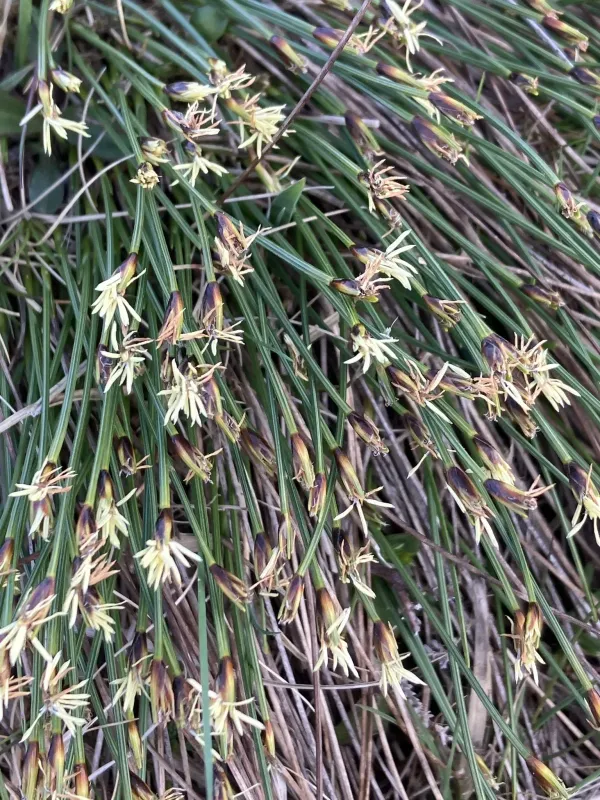
Description
Growing requirements
Deer grass (Trichophorum cespitosum) is a perennial plant belonging to the Cyperaceae family. It is widely recognized for its characteristic tufted growth habit, forming dense clumps or "cushions" that provide structural interest in wet, acidic environments across the northern hemisphere.
This species thrives primarily in peat bogs, heaths, and damp moors. It is highly adapted to nutrient-poor soils, making it an excellent candidate for specialized garden areas or restoration projects where conventional lawn or agricultural grasses would fail to establish.
Botanically, the plant features stiff, wiry stems and narrow leaves. The most distinct feature is its inflorescence, which consists of small, single terminal spikelets that expand into white, downy tufts upon maturation, giving the plant its common name and ornamental appeal.
The cultural requirements are centered on moisture management. Trichophorum cespitosum requires consistently wet or boggy conditions and performs best in full sun or light shade. It is remarkably tolerant of low pH levels and poor soil fertility, which are critical factors for its sustained growth.
In practice, Deer grass is utilized in landscaping to create naturalistic bog gardens or edge habitats for water features. Beyond its visual appeal, it acts as a soil stabilizer in saturated areas, helping to maintain soil integrity and prevent erosion in sensitive wetland ecosystems.
Main diseases and pests
The primary threats to this plant are fungal pathogens that flourish in stagnant, overly humid conditions. Diseases like rusts or leaf spots can impair the visual health of the foliage if proper aeration and site management are not maintained.
Pest pressure remains relatively low due to the plant’s toughness. Occasional infestations of aphids or caterpillars can occur but are generally manageable through cultural practices, such as ensuring the plant is not under environmental stress, which makes it less susceptible to secondary attacks.