
Tricalysia capensis
Tricalysia capensis
Description
Growing requirements
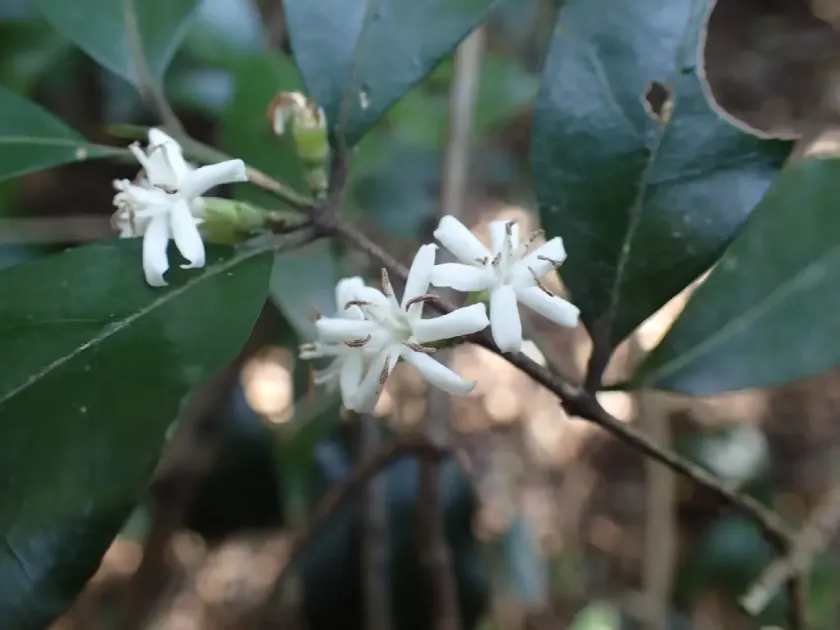
Tricalysia capensis, commonly known as the Cape coffee, is an evergreen shrub or small tree belonging to the Rubiaceae family. Native to the coastal forests and thickets of South Africa, it is highly valued for its dark glossy foliage and fragrant flowers.
The plant thrives in warm, temperate climates and requires a sheltered position away from harsh winds and direct afternoon sunlight. It is frost-tender and must be protected during cooler months if grown in zones outside its natural range.
Successful cultivation depends on soil quality; it prefers fertile, well-draining soil rich in organic matter. While it is adaptable, it performs best when the soil is slightly acidic to neutral, avoiding waterlogged conditions that can damage its roots.
Agricultural management includes regular watering during the growing season to maintain moisture, combined with light pruning to encourage a bushy, compact form. Supplementing with nitrogen-based fertilizers in spring supports its lush, evergreen appearance.
In landscaping, it serves as a versatile hedge, screen, or specimen plant. Its white, star-like flowers are not only beautiful but also produce a sweet fragrance that attracts various pollinators, enhancing the biodiversity of the garden.
Main diseases and pests
Pest management for Tricalysia capensis involves monitoring for scale insects and mealybugs, which are the most frequent culprits in greenhouses or dry environments. Regular inspection of the underside of leaves is recommended.
Fungal issues, particularly root rot, are common if the substrate lacks proper drainage. To prevent pathogen outbreaks, growers should avoid overhead watering and ensure adequate air circulation around the canopy of the shrub.