
Triangle palm
Dypsis decaryi (Jum.) Beentje & J. Dransf.
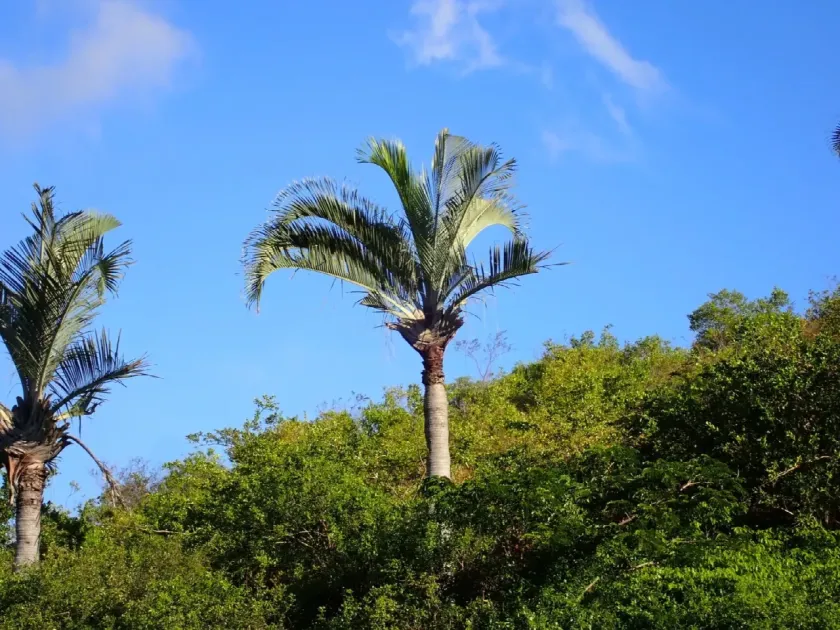
Description
Sowing dates
The propagation of Dypsis decaryi is performed via seeds, which should be harvested when fully ripe for maximum germination rates. Fresh seeds perform significantly better than stored ones.
The seeds are sown in a light, well-draining medium composed of peat moss and perlite. A temperature range of 25–30 degrees Celsius is critical for initiating the germination process.
Maintain consistent soil moisture throughout the incubation period. Excessive water should be avoided to prevent seed rot, which is common in over-saturated substrates.
Germination can be slow and sporadic, often taking from one to several months. Patience is required, and the seed tray should be kept in a warm, protected environment.
Once the seedlings have developed their first true leaves, they should be carefully transplanted into individual containers with a nutrient-rich and porous soil mixture.
Growing requirements
Dypsis decaryi is a species of the Arecaceae family originating from Madagascar. It is globally recognized for its unique triangular trunk shape caused by the base of its leaves.
This palm thrives in full sun conditions. In a landscape or greenhouse setting, it requires at least six to eight hours of direct sunlight daily to maintain its structural integrity.
The soil must be well-drained and slightly acidic to neutral. Heavy clay soils are unsuitable and will lead to rapid root decay if not heavily amended with coarse organic matter.
Regular irrigation is essential during the growing season, but the root zone must be allowed to dry slightly between watering sessions to ensure proper oxygenation of the roots.
Climatically, it prefers tropical and subtropical regions. While it can withstand mild frosts once mature, it is generally best kept in temperature-controlled environments.
Main diseases and pests
Spider mites are the most frequent pests of the Triangle palm, especially when the plant is kept in low-humidity environments. They cause yellowing and spotting of the foliage.
Mealybugs and scales often infest the base of the leaves and the crown. These pests extract sap, weakening the palm and leaving behind sticky residues that invite secondary infections.
Root rot is the most common disease, resulting from poor soil drainage or excessive water retention. Symptoms include leaf wilting, browning of leaf tips, and a foul odor from the soil.
Leaf spot fungi can develop during periods of high humidity and poor ventilation. Keeping the canopy clean and ensuring adequate spacing between plants is critical for disease management.
Integrated pest management, including the use of horticultural oils and systemic insecticides, is recommended when cultural controls are insufficient to manage heavy infestations.