
Trevesia sundaica
Trevesia sundaica
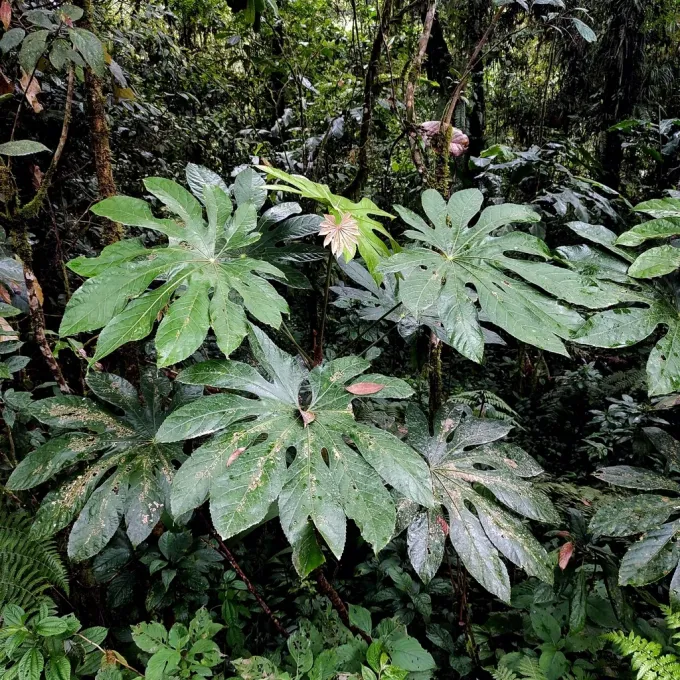
Description
Growing requirements
Trevesia sundaica is a distinctive evergreen shrub belonging to the Araliaceae family. It is naturally distributed throughout the tropical rainforests of the Sunda Islands and wider Southeast Asia, where it thrives in warm and humid understory environments.
To cultivate this species successfully, it is essential to maintain a consistent tropical climate. The ideal temperature range is between 20°C and 27°C, as the plant does not tolerate frost or cold drafts, which may lead to leaf abscission or growth stagnation.
The substrate must be light, highly porous, and rich in organic matter. A well-draining potting mix, typically composed of peat moss, perlite, and decomposed compost, is recommended to support root health and prevent oxygen deprivation in the root zone.
Lighting requirements involve bright, indirect sunlight. Direct exposure to intense sun rays can damage the large, deeply palmate leaves, which are the plant's main ornamental feature. Partial shade or diffused light from an eastern-facing window is usually optimal.
Proper moisture management is critical. The plant requires a high level of air humidity, often exceeding 60-70%. Regular misting or the use of automated humidification systems is highly recommended for indoor environments to preserve the plant's health.
Main diseases and pests
Common pests affecting Trevesia sundaica include spider mites and mealybugs. These pests are particularly problematic in environments with low humidity, as they can multiply rapidly on the undersides of the leaves.
Root rot caused by Phytophthora or Pythium species is a major threat resulting from waterlogged soil. Ensuring that the pot has adequate drainage holes and avoiding excess watering is the primary method of disease prevention.
Biological control agents, such as predatory mites, can be used to manage spider mite populations effectively in greenhouse or indoor collections without excessive chemical reliance.
Fungal leaf spot diseases may appear if there is poor air circulation and high humidity combined with stagnant air. Increasing ventilation and applying systemic fungicides can help mitigate these problems.
Consistent monitoring and maintaining good plant hygiene, such as removing senescent leaves and cleaning foliage regularly, are fundamental steps in managing plant health and preventing outbreaks of pests and diseases.